 Genzee
How Inflation Quietly Shrinks Your Salary (And How to Check Yours)
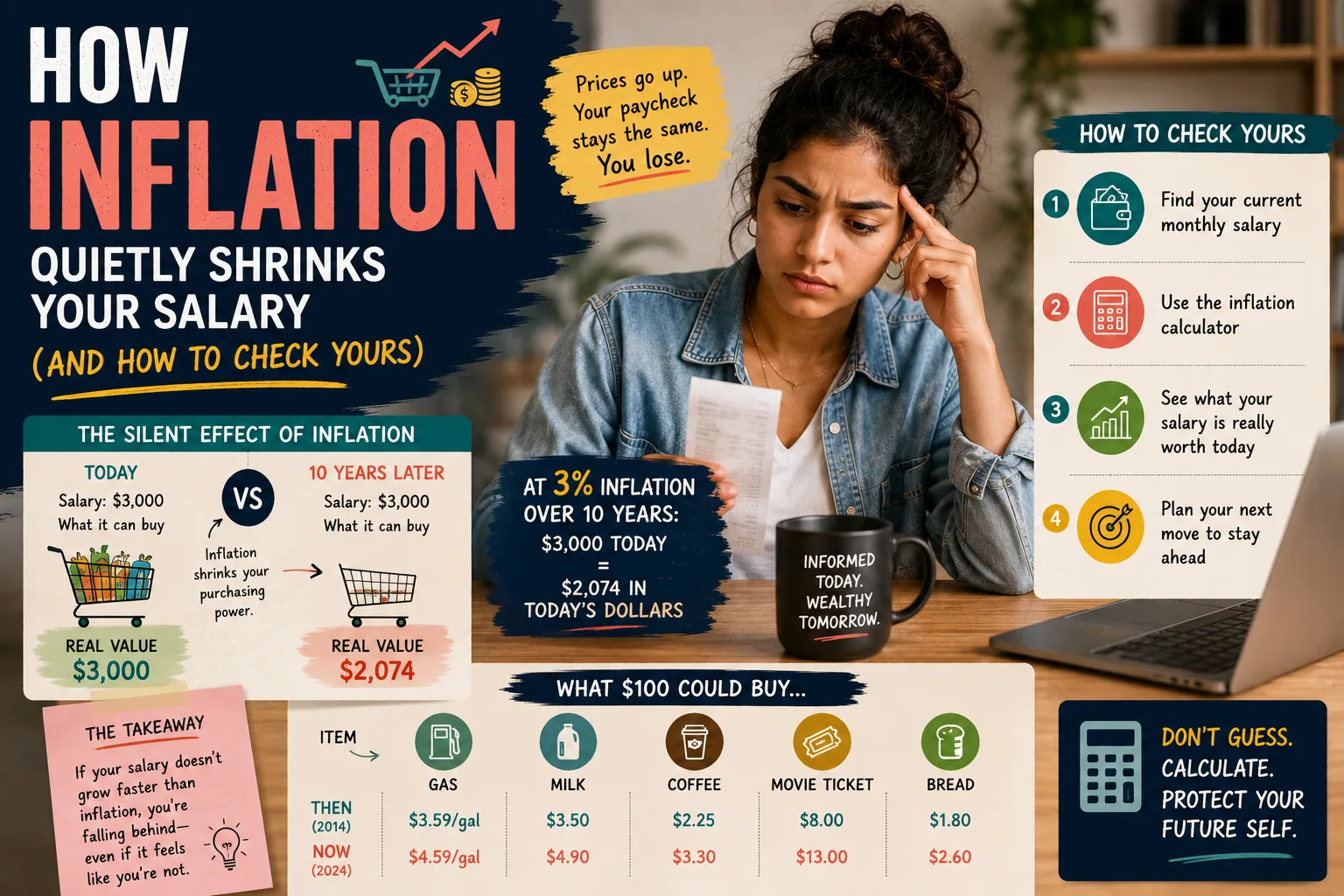
A 10% raise sounds like unambiguously good news, until inflation for the same period turns out to be 12% — at which point that “raise” was actually a pay cut in every way that matters for what you can actually buy. This gap between the number on your payslip and what it's actually worth is the difference between nominal and real income, and most people never explicitly check it, which is exactly how inflation quietly erodes take-home value year after year without ever showing up as a visible loss.
Nominal vs real: the distinction that actually matters
Your nominal salary is simply the rupee, dollar or other currency figure printed on your payslip — the number that goes up when you get a raise. Your real salary is that same figure adjusted for inflation — what it's actually worth in terms of purchasing power, compared to some earlier reference point. A salary can rise in nominal terms every single year and still fall in real terms, if inflation consistently outpaces the raises. This is precisely why “did I get a raise” is the wrong question if the goal is understanding whether you're actually better off — “did my raise beat inflation” is the right one.
A quick way to adjust a raise for inflation
The fast mental-math version: subtract the inflation rate for the period from your nominal raise percentage to get a rough estimate of your real raise. A 10% raise against 12% inflation gives roughly a -2% real change — you can buy slightly less than before, despite the bigger number on your payslip. This shortcut isn't exact (the precise calculation involves dividing, not subtracting, growth factors), but it's close enough for a quick gut-check, and the percentage calculator handles the more precise version in seconds when it matters — for instance, when actually negotiating a raise.
A worked example over several years
Say a salary rises nominally by 8% a year for three years running, while inflation averages 10% a year over the same period. Each individual year looks like growth on the payslip, but compounded over three years the nominal salary rises about 26%, while the cost of living rises about 33% — meaning real purchasing power has actually fallen by roughly 5% over those three years, even though the nominal number never stopped climbing. This compounding gap is exactly why inflation feels invisible year to year but can add up to a significant, tangible loss of purchasing power over several years if raises consistently lag behind it.
A rough way to check your own purchasing power
- Find your country's published inflation rate for the relevant period — usually released monthly or annually by the national statistics agency or central bank; use the actual figure rather than a guess.
- Compare it against your actual raise percentage for the same period, not just this year's raise against this year's headline inflation figure in isolation.
- Look at cumulative, not single-year, numbers if you want to know your real trend over several years — a few percent gap compounds noticeably over time.
- Convert to a comparable pay basis if your work arrangement changed (hourly to salaried, or vice versa) using the salary converter, so you're comparing like with like before adjusting for inflation.
What to actually do with this information
Checking your real (inflation-adjusted) salary trend isn't just an academic exercise — it's useful, concrete evidence in a raise negotiation (“my nominal pay rose 8% but my real purchasing power fell”) and it's a sanity check against the vague feeling that “money doesn't go as far as it used to,” replacing that feeling with an actual number. It also reframes savings and investment goals: if a savings account's interest rate is below inflation, the balance is technically losing real value even while the nominal number keeps growing — a pattern the compound interest guide covers from the investing side.
Figures above are illustrative examples, not a substitute for checking your own country's actual inflation data (usually published monthly by the national statistics agency or central bank) when doing this math for real.
Frequently asked questions
What's the difference between nominal and real salary?Nominal salary is the actual currency figure on your payslip. Real salary is that figure adjusted for inflation — what it's actually worth in purchasing power terms, which can fall even while the nominal number rises.
A rough shortcut is subtracting the inflation rate for the period from your raise percentage — a 10% raise against 8% inflation is roughly a +2% real gain. For precision, use an actual growth-factor calculation rather than this shortcut.
Yes — if inflation consistently runs higher than your raises, your nominal pay keeps climbing on paper while your real purchasing power falls, and that gap compounds noticeably over several years.
National statistics agencies or central banks typically publish official inflation figures on a regular schedule (often monthly, with annual figures too) — use the official published number for your country rather than a guess or a global average.
Yes — if a savings account's interest rate is below the inflation rate, the balance's real purchasing power is falling even while its nominal number keeps growing, which is a similar dynamic to the wage-erosion effect described here.
Related tools
- H⇄SHourly to Salary Converter
Convert an hourly rate to monthly and yearly pay — and back.
- %Percentage Calculator
Percent of a number, percentage share, and increase or decrease.
- SGSavings Goal Calculator
How long to reach a savings target with monthly deposits.
- CICompound Interest Calculator
See how savings grow with a year-by-year compound growth table.