 Genzee
Harvard Report: Rental Affordability Crisis Deepens Even as Rent Growth Cools
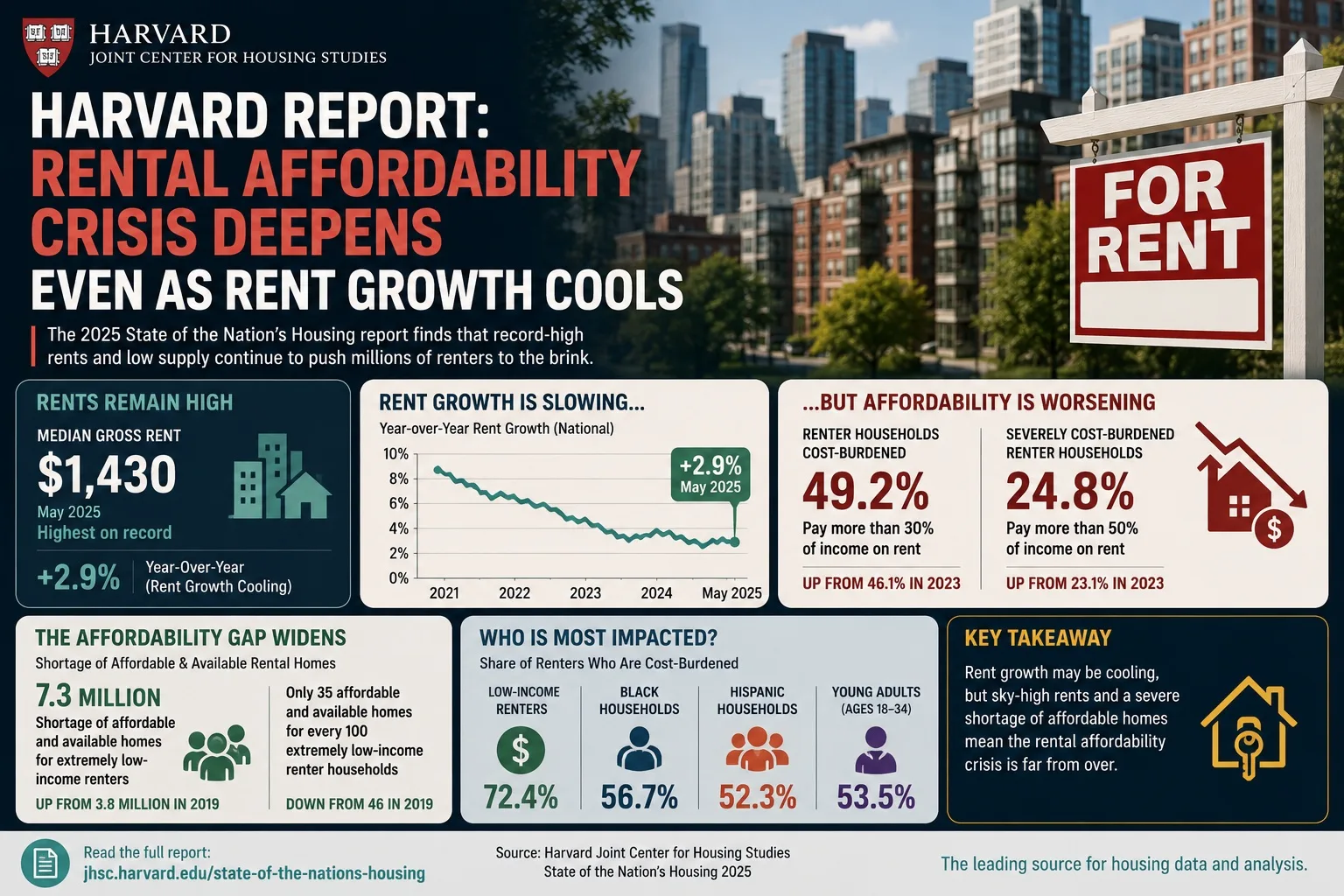
National rent growth has cooled toward zero, but a rental affordability crisis has deepened rather than eased, according to Harvard's Joint Center for Housing Studies "America's Rental Housing 2026" report — a reminder that slower rent growth is not the same as rent becoming affordable.
The scale of the affordability problem
The report found 22.7 million renter households spent more than 30% of income on rent and utilities in 2024 — 49% of all renters — with 12.1 million of those households severely cost-burdened, paying more than half their income toward housing.
Why cooling rent growth hasn't fixed the underlying problem
Asking rents for professionally managed apartments actually declined slightly, by 0.6%, year over year by the fourth quarter of 2025, as new multifamily supply came online in several markets. But rents remain historically high relative to income even where growth has slowed, meaning a pause in rent increases hasn't undone years of accumulated affordability pressure.
A shrinking supply of lower-cost units
Between 2014 and 2024, the number of units renting for under $1,400 fell by 9.3 million, while units renting for $1,400 or more increased by 11.8 million — a structural shift toward higher-cost rental stock that a temporary cooling in rent growth doesn't reverse, and that disproportionately affects lower-income renters searching for affordable options.