 Genzee
US Jobs Report: Unemployment Falls, But Only Because People Left the Workforce
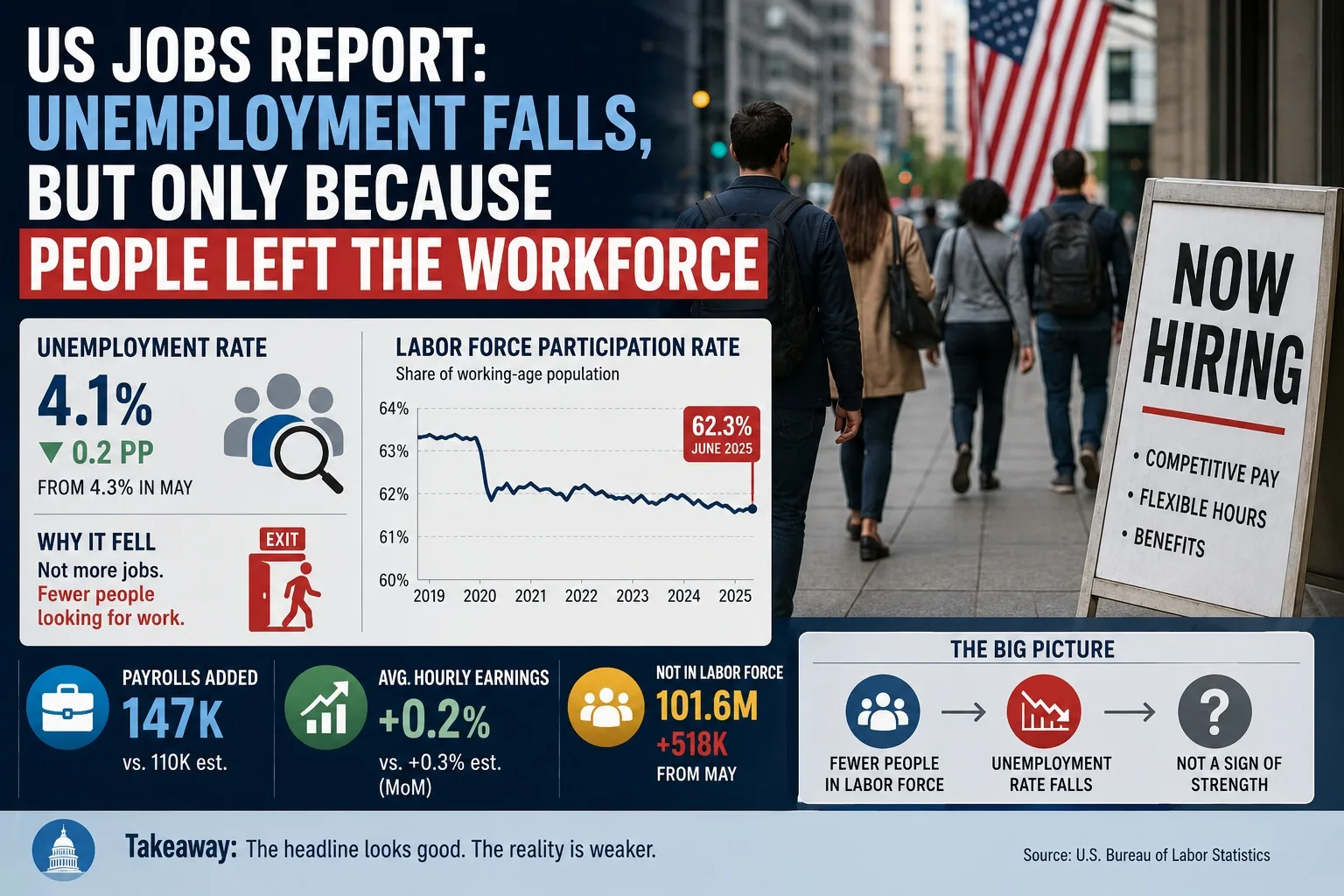
US nonfarm payrolls fell by 23,000 in July, alongside a combined 103,000 downward revision to May and June — even as the headline unemployment rate dropped to 4.1%. The two figures moving in opposite directions is the story: the improvement is not what it looks like on the surface.
Why the unemployment rate fell despite job losses
The unemployment rate only counts people actively looking for work. The labour force shrank by 264,000 in July, pushing the participation rate down to 61.4% — its lowest since early 2021. When people stop looking for work altogether, they no longer count as "unemployed" in the official figure, which can push the headline rate down even while the underlying job market weakens.
Where the losses concentrated
Employment declined in local government education and retail trade, while healthcare continued its steady upward trend — a sector-specific pattern that has held for much of 2026, with healthcare acting as one of the few consistent sources of job growth.
Why this matters beyond one month's data
A falling unemployment rate driven by people leaving the workforce, rather than by hiring, is generally read by economists as a warning sign rather than good news — it can mask real softening in demand for workers. Combined with slowing wage growth noted in the same report, July's data adds to a picture of a labour market cooling faster than headline numbers alone would suggest.
Source: Bloomberg