 Genzee
Bank of Japan Holds Rate at 1%, Warns Inflation May Exceed Target
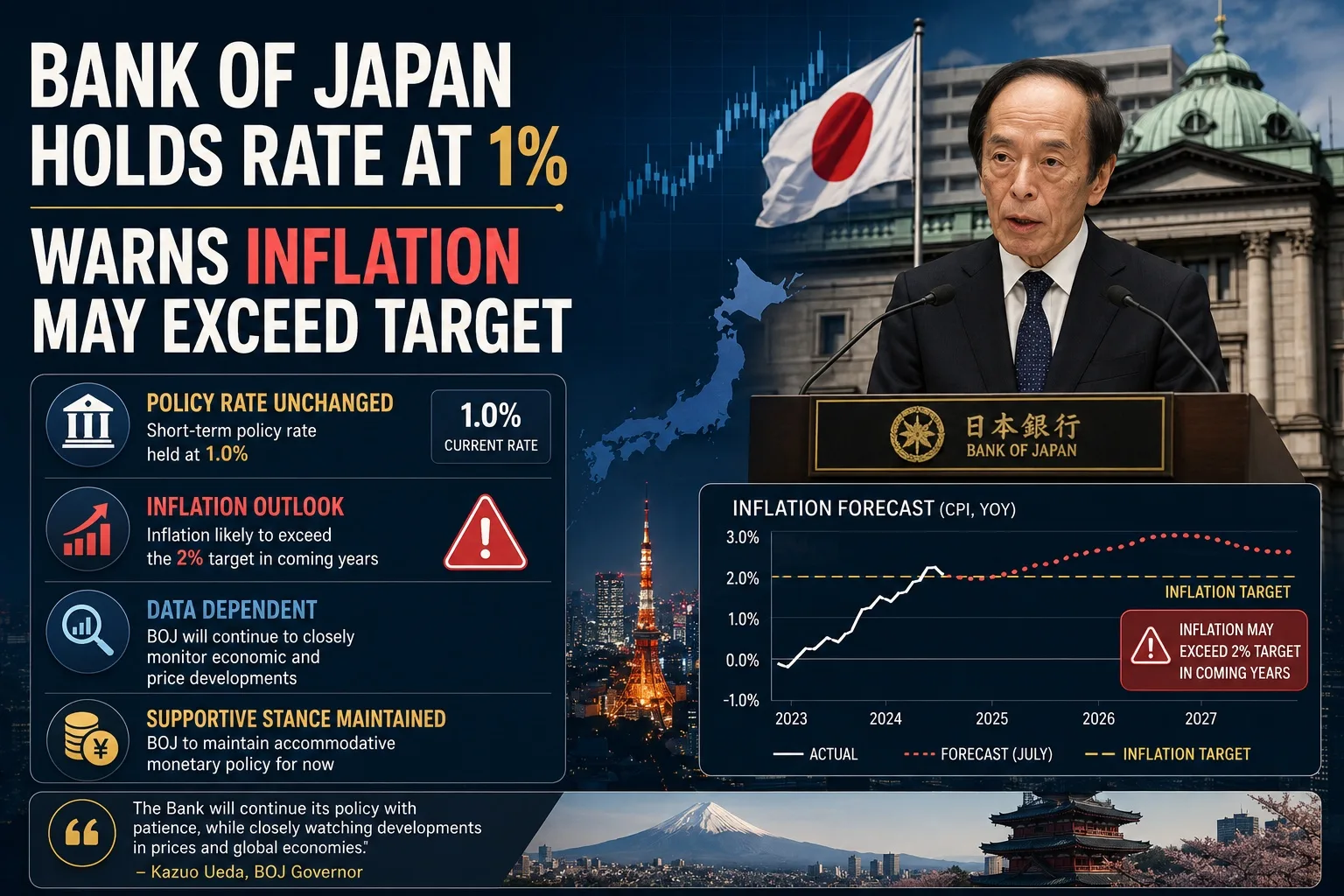
The Bank of Japan held its policy rate steady at 1% in July, the highest level since 1995, while warning that core inflation could run above its 2% target — a notable statement from a central bank long associated with near-zero rates and persistently low inflation.
How Japan got here
The BOJ raised rates to 1% in June, its first hike since a December increase to 0.75%, driven by a weakening yen and inflation that had started climbing. The June decision passed on a split 7-1 vote, reflecting genuine disagreement within the board about the pace of tightening.
Why the July hold, despite the inflation warning
Even while flagging inflation risk, the BOJ opted to hold rather than hike again immediately — an 8-1 decision, with one board member pushing for a further increase to 1.25%. Central banks often pause briefly between hikes to assess how prior increases are filtering through the economy before moving again.
Why this is a bigger deal than it might sound
Japan has operated with near-zero or negative interest rates for most of the past three decades, making even modest hikes a significant policy shift. A Japanese central bank actively raising rates and warning about inflation exceeding target is a meaningfully different economic backdrop than markets have grown used to, with knock-on effects for global currency and bond markets given Japan's size as a global lender.
Source: CNBC