 Genzee
Zakat al-Fitr vs. Zakat al-Mal: What's the Difference?
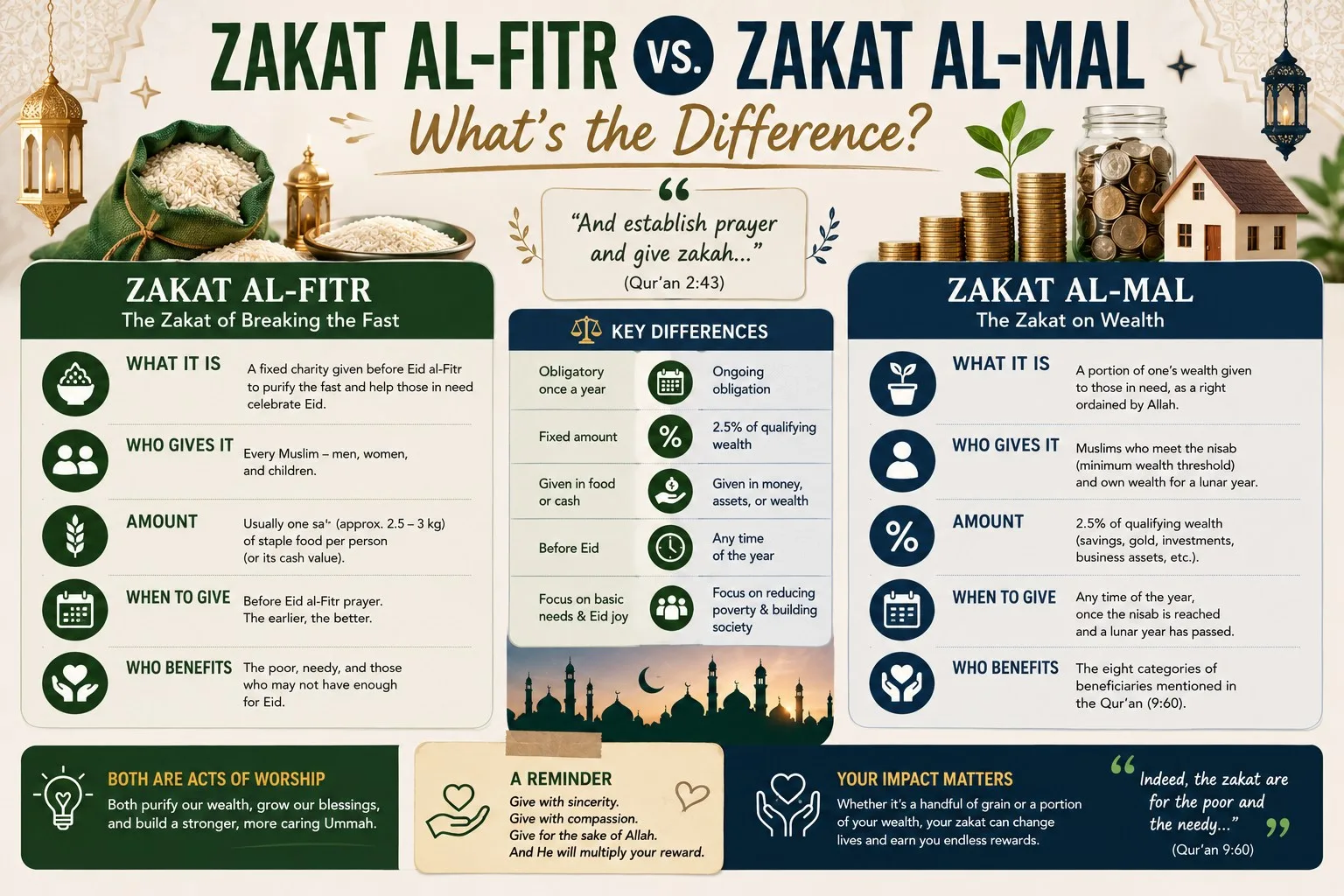
Zakat al-Fitr and Zakat al-Mal share a name and a religious foundation, but they're calculated in entirely different ways, owed by different logic, and due at different times — conflating the two is a common source of confusion, especially for anyone calculating their obligations for the first time.
Zakat al-Mal: the annual wealth-based obligation
Zakat al-Mal is calculated as a percentage (traditionally 2.5%) of qualifying wealth held above a minimum threshold, known as nisab, for a full lunar year. It applies individually — each person calculates it based on their own qualifying assets: cash, gold, silver, business inventory, and certain other holdings, generally excluding a primary home and personal-use items.
Zakat al-Fitr: the fixed per-person obligation around Eid
Zakat al-Fitr, or Fitrana, is a small fixed amount per person, traditionally based on the value of a staple food, due before the Eid al-Fitr prayer at the end of Ramadan. It doesn't depend on wealth level or a minimum threshold the way Zakat al-Mal does — it's owed on behalf of every household member a person is financially responsible for, regardless of that dependent's own financial situation.
Why the calculation methods are so different
Zakat al-Mal is designed around redistributing a share of accumulated wealth annually — hence the percentage-of-assets structure. Zakat al-Fitr is designed to ensure every household, regardless of wealth level, can participate in providing for others specifically around Eid, which is why it's a modest fixed amount tied to a staple food's cost rather than scaled to individual wealth.
Why the Fitrana rate changes every year
Because it's pegged to the price of a staple food, the appropriate Fitrana amount moves with food prices each year — a rate calculated three years ago will understate the real obligation today. Local religious authorities typically announce a fresh figure each Ramadan specifically to account for this, which is why using last year's number is a common but avoidable mistake.
Do you owe both?
They're independent obligations — someone below the Zakat al-Mal wealth threshold may still owe Zakat al-Fitr for their household, since the latter doesn't depend on a wealth minimum. Someone who qualifies for both should calculate and give each separately, using the correct method for each rather than assuming one calculation covers both obligations.
Common mistakes worth avoiding
Two errors come up often: applying the 2.5% Zakat al-Mal percentage to a Zakat al-Fitr calculation (they use entirely different formulas), and reusing a Fitrana amount from a previous year without checking whether the currently announced rate has changed. Both are easy to avoid by treating the two obligations as genuinely separate calculations from the start, rather than variations on the same math.
Giving on behalf of someone else
Because Zakat al-Fitr is owed per household member rather than per individual wealth, a head of household typically calculates and gives it on behalf of dependents directly, without those dependents needing any qualifying wealth of their own. This is a meaningful structural difference from Zakat al-Mal, where each person's obligation is tied strictly to their own individual assets.