 Genzee
What Actually Moves the USD to PKR Exchange Rate?
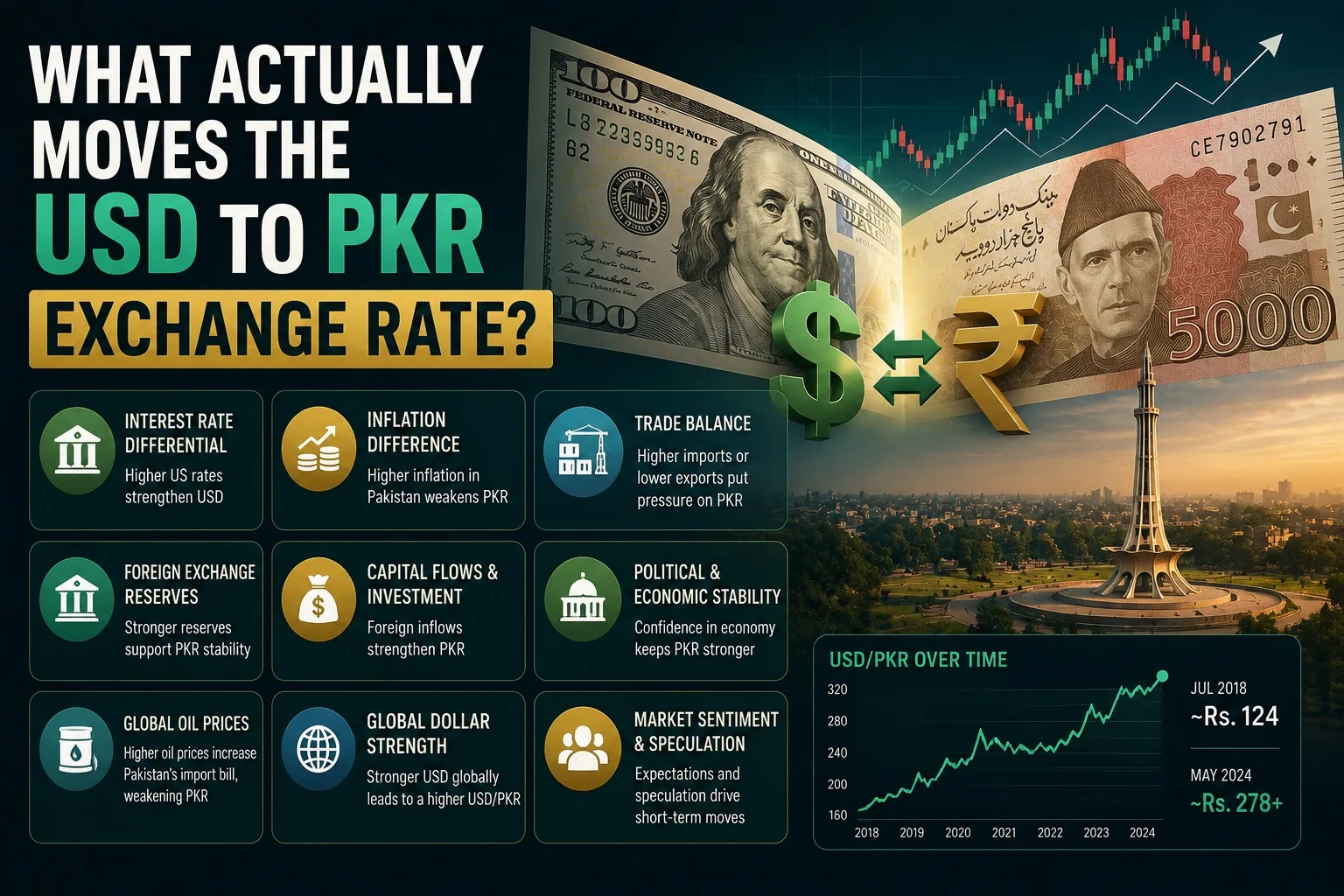
Open any Pakistani news app and the USD to PKR rate is somewhere on the front page — it is one of the most closely watched numbers in the country's economy. But what actually pushes it up or down on any given day?
Remittances: a major source of dollar supply
Overseas Pakistanis sending money home convert dollars into rupees, which is one of the largest steady sources of dollar supply into Pakistan's currency market. A strong month of remittance inflows tends to support the rupee; a weak one adds pressure toward depreciation, all else being equal — which is part of why remittance data is watched almost as closely as the exchange rate itself.
Import demand: the main source of dollar demand
Pakistan imports a significant share of its energy, machinery and raw materials, all typically paid for in dollars. Rising import demand — whether from economic growth, oil price spikes, or seasonal patterns — increases demand for dollars in the local market, pushing the exchange rate in the opposite direction from remittances.
SBP reserves and intervention
The State Bank of Pakistan holds foreign exchange reserves and can buy or sell dollars in the open market to manage volatility, though it does not fix the rate outright under the current market-based regime. Rising SBP reserves generally signal more capacity to smooth out sharp currency swings; falling reserves can make the rupee more vulnerable to sudden pressure.
Interest rate differentials
When Pakistan's interest rates are meaningfully higher than rates in the US or other major economies, rupee-denominated assets become relatively more attractive to yield-seeking investors, which can support the currency. When that gap narrows — say, if the Fed raises rates while the SBP holds — some of that support fades, a dynamic that plays out across most emerging-market currencies, not just the rupee.
Why the rate can move even with no single "big" news event
All of these factors interact continuously, not just on days with major headlines — a quieter-than-usual week for remittances, a routine import payment cycle, or minor shifts in global dollar strength can all nudge the rate without any single dramatic cause. Trying to explain every daily wiggle with one specific event usually oversimplifies what is really a constant balance of several forces at once.
What this means for planning around the rate
Anyone budgeting for a dollar-denominated expense — tuition abroad, an import order, a foreign trip — is better served by watching the underlying trend across these factors than trying to time a single "best" day to convert. Checking a live rate before any actual transaction remains essential, since the underlying drivers shift the number continuously.