 Genzee
What Is Loan-to-Value (LTV) and Why It Decides Your Mortgage Rate
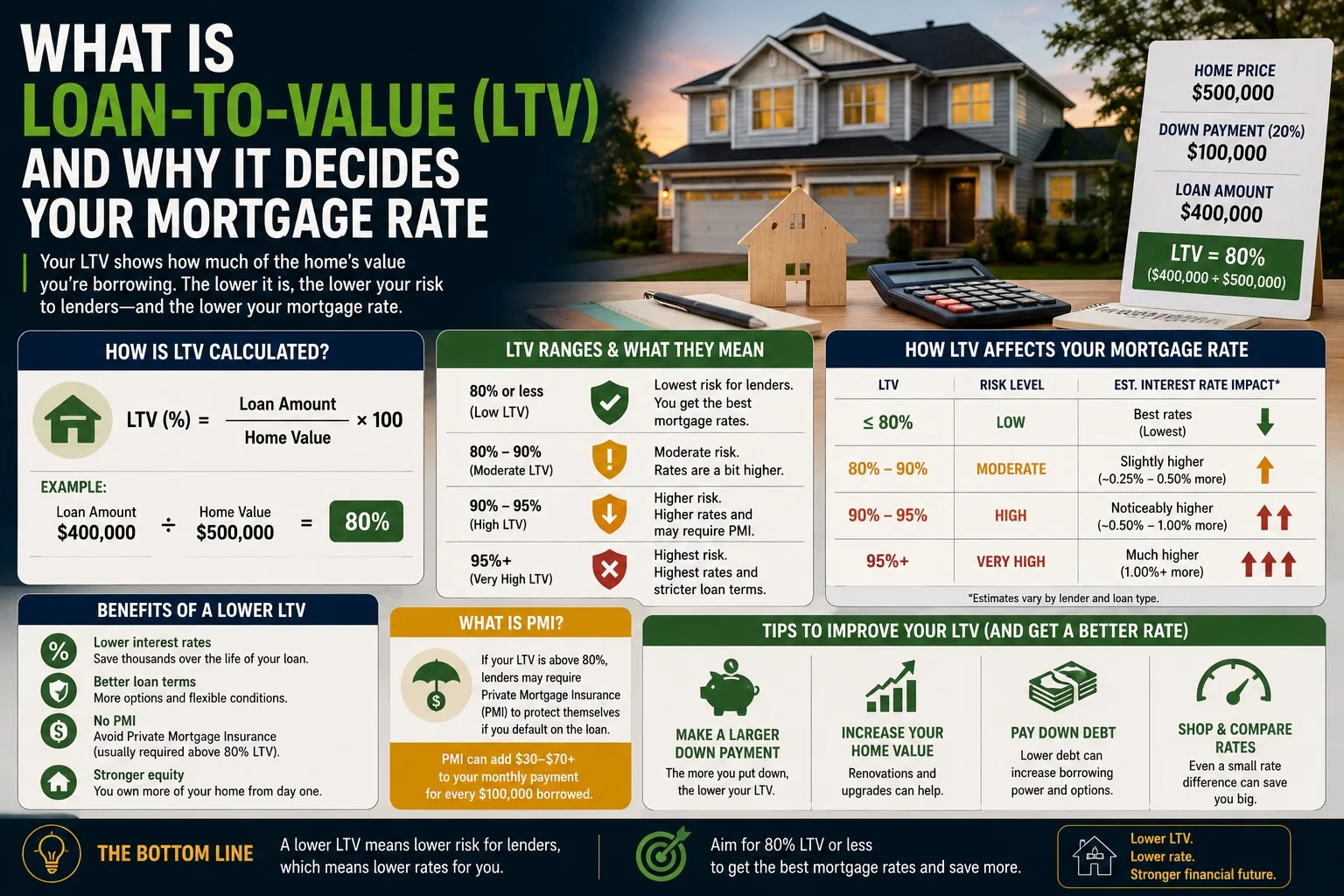
Long before a mortgage application looks at income or credit history in detail, lenders calculate one number that shapes almost everything else about the offer: loan-to-value, or LTV.
The basic calculation
LTV is simply the loan amount divided by the property's value, expressed as a percentage. Borrow 12,000,000 against a property worth 15,000,000, and the LTV is 80% — the loan covers 80% of the property's value, with the remaining 20% coming from the buyer's down payment or existing equity.
Why lenders care so much about this number
LTV is a direct measure of how much cushion exists if the property needs to be sold to recover the loan — say, after a default. A lower LTV means the buyer has more equity in the property from the start, which reduces the lender's exposure if property values fall or the borrower can't keep up payments. This is why LTV, more than almost any other single number, drives both the interest rate offered and whether additional protections like mortgage insurance are required.
Common LTV thresholds worth knowing
Many lenders treat 80% LTV as a meaningful line: below it, borrowers often get more favorable rates and avoid extra insurance requirements; above it, lenders frequently require private mortgage insurance or charge a rate premium to offset the added risk. LTV above roughly 90-95% is often treated as high-risk territory, with stricter approval criteria or outright refusal from some lenders.
How LTV changes after the loan is taken out
LTV isn't fixed at closing — it moves as the loan balance is paid down and as the property's market value changes. Rising property values can lower a borrower's effective LTV even without any extra payments, which is why some borrowers proactively request a reassessment to remove mortgage insurance once their equity position has genuinely improved, rather than waiting out the original schedule.
Balancing a lower LTV against other priorities
A larger down payment lowers LTV and generally improves loan terms, but it also ties up more cash in a single asset. Whether it's worth stretching for a lower LTV depends on what else that cash could be doing — clearing higher-interest debt first, or maintaining a sufficient emergency fund, can be a better use of the same money than shaving a few points off LTV, depending on the specific numbers involved.
LTV on a refinance is calculated differently
When refinancing an existing mortgage, LTV is recalculated against the property's current appraised value, not its original purchase price — which means a home that has appreciated since purchase can produce a noticeably better LTV on refinance than the original loan had, even without extra principal payments. This is one of the more overlooked reasons a refinance can unlock better terms: the property side of the equation may have moved favorably on its own.