 Genzee
Nominal vs. Effective Interest Rate: The Difference That Actually Costs You
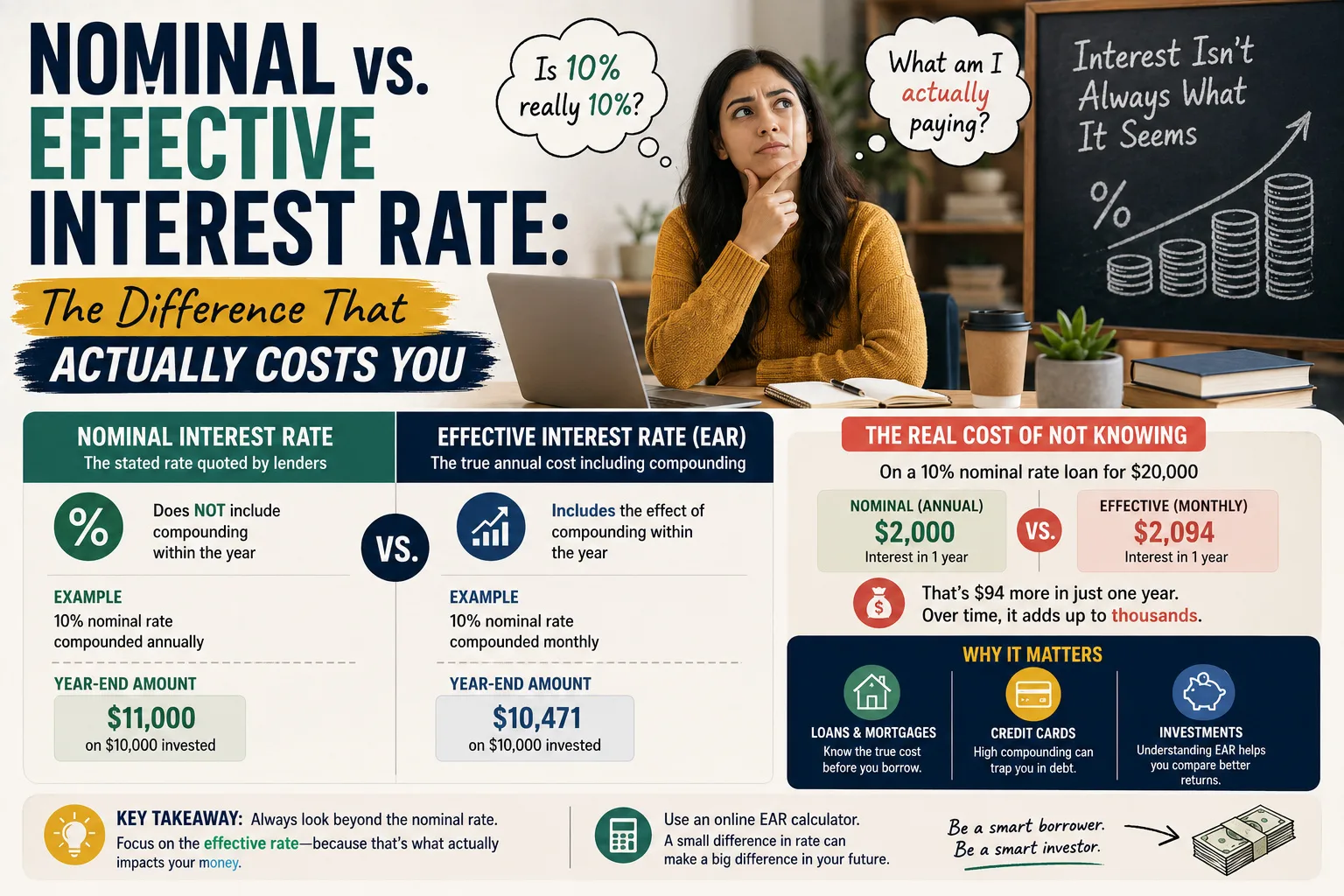
Two loans advertising the same "12% interest rate" can cost genuinely different amounts — not because either lender is lying, but because the stated rate and the rate that actually applies over a year are not always the same number.
What "nominal" actually means
The nominal rate is the stated annual rate before accounting for how often it compounds within the year. It's the number most commonly advertised, precisely because it's usually the smaller-looking figure compared to the effective rate once compounding is factored in.
What compounding actually does
When interest compounds more than once a year, each compounding period's interest itself starts earning interest for the rest of the year — interest on interest, not just on the original amount. A 12% nominal rate compounded monthly means 1% is applied every month, and each month's 1% then compounds against a slightly larger base for the remaining months, producing more than a simple 12% total by year's end.
The actual gap, with numbers
Run the math on a 12% nominal rate compounded monthly, and the effective annual rate works out to roughly 12.68% — not 12%. The gap between 12% and 12.68% might look small in isolation, but it grows more significant at higher rates or with more frequent compounding (daily compounding produces a larger gap than monthly, for the same nominal rate), and it compounds itself across every year a loan or investment runs.
Why this matters when comparing offers
Two products quoting the identical nominal rate but compounding at different frequencies are not actually offering the same deal — the one compounding more frequently is more expensive for a loan and more rewarding for a savings product. Comparing the effective annual rate, rather than the advertised nominal figure, is the only reliable way to fairly compare offers with different compounding structures side by side.
Why regulators require effective-rate disclosure
Because nominal rates alone can make genuinely different offers look identical, many countries require lenders to disclose an effective or "annual percentage rate" figure specifically so borrowers can compare products on equal footing. Where that disclosure exists, checking it directly saves the trouble of converting nominal rates by hand — where it doesn't, converting the nominal rate yourself is the only way to see the real cost.
The same math, working in your favor
Everything above sounds like a warning about borrowing costs, but the identical mechanism works in a saver's favor on the other side of the transaction: a savings account or investment quoting a nominal return compounds the same way, meaning the real annual growth is slightly higher than the advertised headline figure suggests. More frequent compounding is bad news when you're the one paying interest, and good news when you're the one earning it — the formula doesn't care which side of the transaction you're on.