 Genzee
How Interest Rates and Inflation Are Connected: Pakistan's Monetary Policy Explained
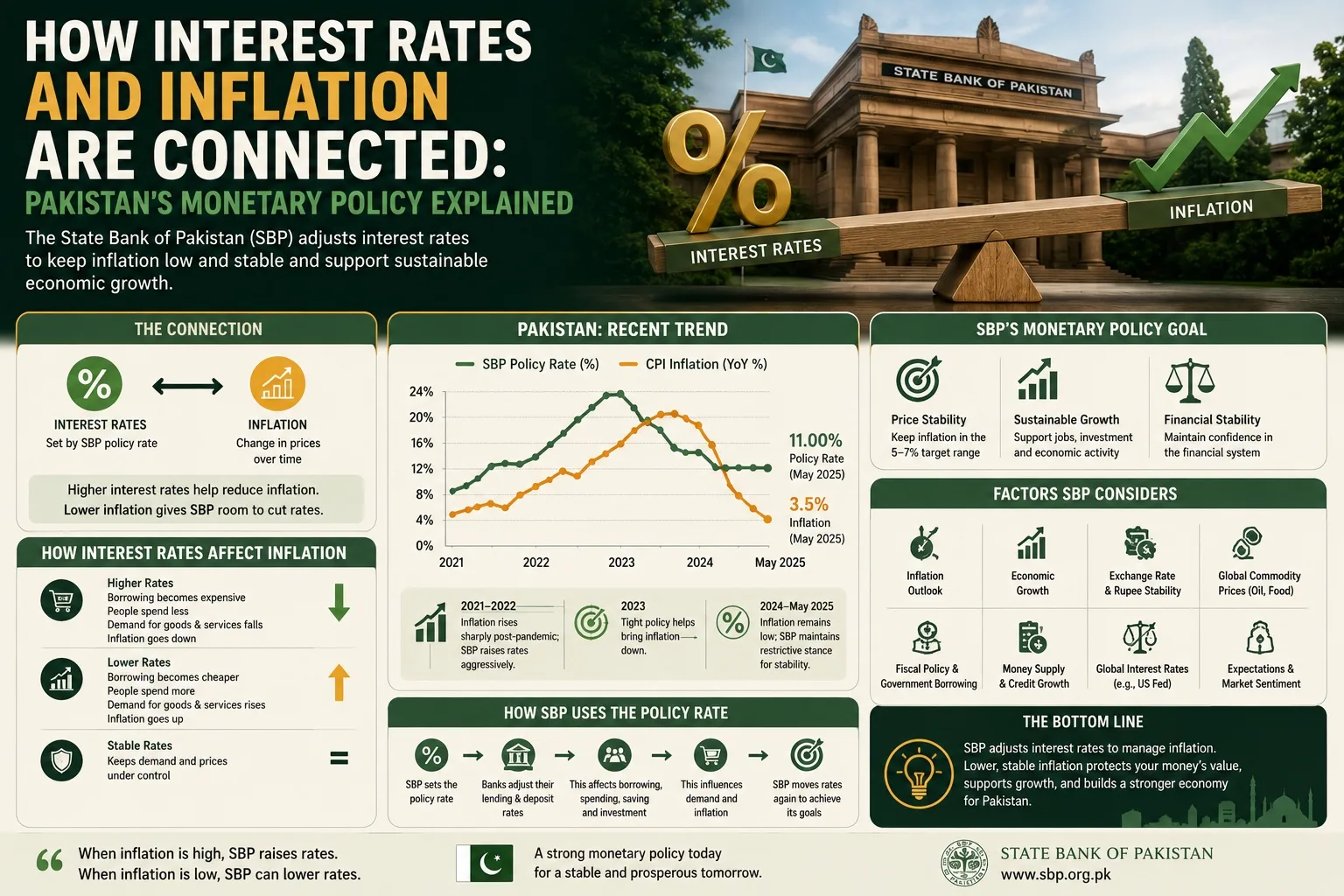
"The central bank raised rates to fight inflation" is a headline most people have read dozens of times without necessarily knowing the actual mechanism connecting the two. Here is how raising or cutting a single interest rate genuinely influences prices across an entire economy.
The basic chain of cause and effect
When the SBP raises its policy rate, borrowing becomes more expensive throughout the economy — banks raise the rates they charge on loans and mortgages, and often raise the rates they pay on savings accounts too. More expensive borrowing discourages businesses from taking loans to expand, and discourages consumers from financing large purchases, which cools overall spending in the economy.
Why cooling spending fights inflation
Inflation is, at its core, too much money chasing too few goods — when demand outpaces supply, prices rise. Cooling demand by making borrowing more expensive reduces that pressure, giving supply a chance to catch up without prices needing to climb as fast. It is a deliberately blunt tool: it slows spending broadly, not just in the specific sectors driving inflation.
Why the effect takes time
Interest rate changes do not affect prices immediately — the full effect typically takes many months to work through the economy, as existing loans reprice, new borrowing decisions get made, and spending patterns gradually shift. This is why central banks, including the SBP, often hold rates steady for a period after a change to assess how it's filtering through before adjusting again.
The trade-off central banks are managing
Raising rates to fight inflation also makes borrowing more expensive for genuinely productive purposes — a business wanting to expand, a family wanting to buy a home — which can slow economic growth and job creation. Central banks are constantly balancing this trade-off: move too aggressively and risk unnecessary economic pain; move too cautiously and risk inflation becoming entrenched and harder to reverse later.
Why this matters for your own financial decisions
Understanding this connection makes interest rate announcements genuinely useful rather than just background news: a rate hold after a period of high inflation often signals the central bank sees some progress; a fresh hike signals continued concern. Either way, the direction of policy rates is a reasonable signal for whether borrowing costs are likely to rise or ease in the near term — worth factoring into the timing of a major loan or mortgage decision if there's flexibility in when to commit.
Why rates and inflation don't always move together perfectly
Interest rates aren't the only thing affecting inflation — supply shocks (a bad harvest, an oil price spike, a currency depreciation raising import costs) can push prices up regardless of how tight monetary policy is, since raising rates does nothing to directly fix a supply-side problem. This is why inflation can stay elevated even after a series of rate hikes, and why central banks sometimes explicitly separate "supply-driven" inflation from "demand-driven" inflation when explaining a policy decision.
What a rate cut signals, by contrast
When inflation has cooled and economic growth looks weak, a central bank may cut rates to encourage borrowing and spending again — the same mechanism running in reverse. A cutting cycle generally signals confidence that inflation is under control, freeing the central bank to shift focus toward supporting growth and employment instead.