 Genzee
How to Actually Calculate (and Negotiate) Your Salary Raise
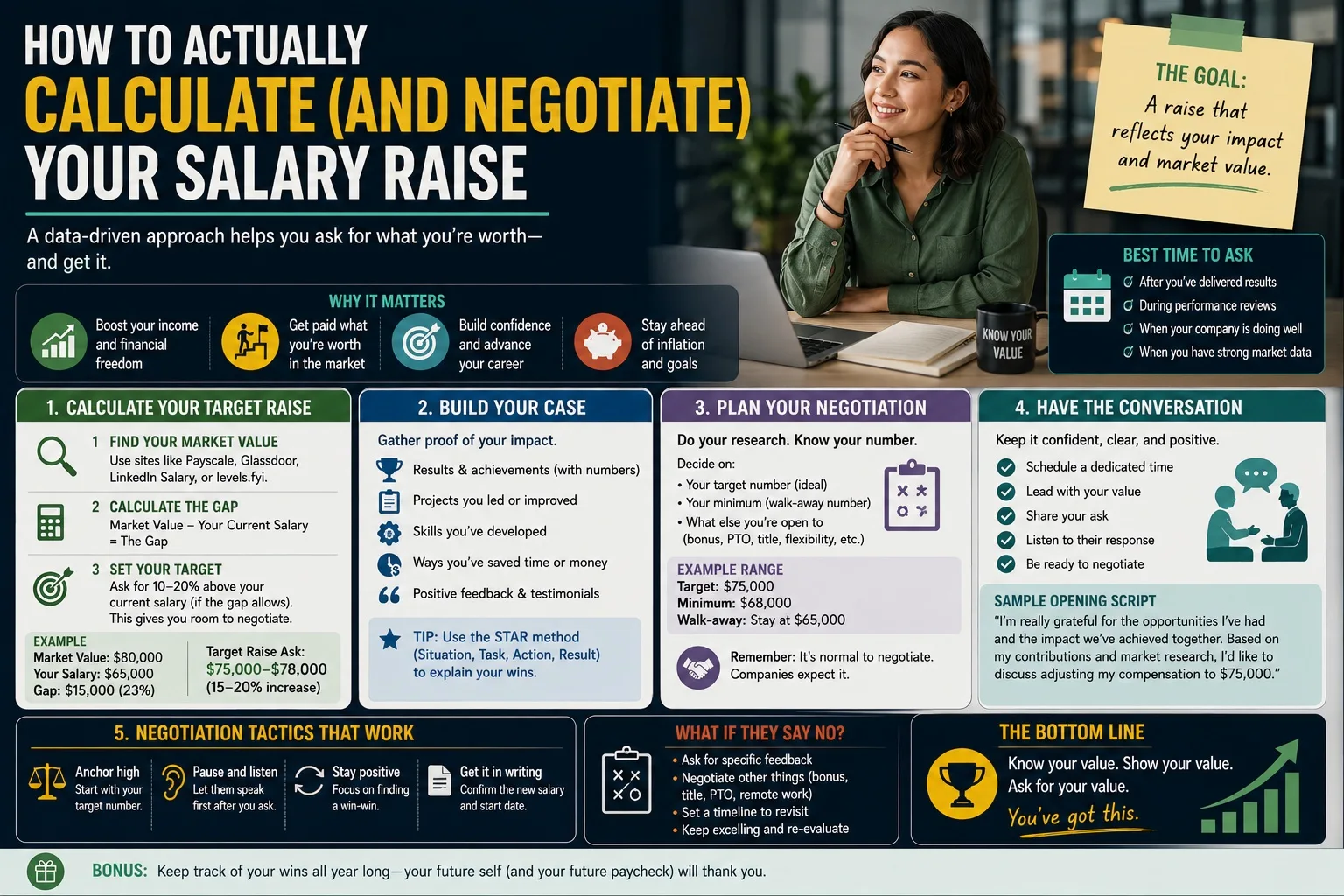
"You're getting a 10% raise" sounds like a clear, simple statement — until the actual new number on the offer doesn't quite seem to match. The gap usually comes down to which base the percentage was calculated against, and it's worth checking rather than assuming.
The basic calculation
A raise percentage is the increase in salary divided by the original salary, multiplied by 100. Going from 100,000 to 110,000 is a straightforward 10% increase. The confusion creeps in when the "10%" being discussed was actually calculated against a different figure — total compensation including a bonus, for instance, rather than base salary alone.
Why checking the actual numbers matters
Calculating the increase directly from the old and new salary figures — rather than trusting a quoted percentage — removes any ambiguity about what base was used. This is a two-minute check worth doing on any offer letter or raise announcement, especially when total compensation includes variable components like bonuses or commission that can shift the percentage depending on how it's framed.
Nominal raise vs. real raise
A raise's real value depends heavily on inflation over the same period. A 10% raise in a year when prices rose 9% represents only about a 1% genuine improvement in purchasing power, even though the headline number looks solid. Comparing a raise percentage against the current inflation rate gives a far more honest read on whether a raise actually moves the needle financially.
Using the number in a negotiation
Walking into a raise conversation with a specific target percentage — informed by market rate research, inflation, and your own performance case — is a stronger position than a vague sense that "more would be nice." Framing a counter-offer as a specific percentage, backed by a clear reason (a promotion, expanded responsibilities, a comparison to market rate for the role), tends to land better than an unanchored request.
What to check beyond the percentage
A raise's real value also depends on when it takes effect (a raise backdated to the start of the year is worth more than the same percentage starting next quarter), whether it compounds into future bonus or benefit calculations, and how it compares not just to inflation but to what the same role commands elsewhere in the current market. The percentage is the headline number, but it's rarely the complete picture.
Researching market rate before the conversation
A raise conversation grounded in what comparable roles pay elsewhere carries more weight than one grounded purely in personal financial need — salary data from industry surveys, job postings for similar roles, or professional networks all help establish whether a current salary has genuinely fallen behind market rate, which is a stronger negotiating basis than "costs have gone up" alone.
What to do if the number falls short
If an offered raise comes in below both inflation and market rate, it's worth asking directly what would need to change — performance targets, added scope, a defined timeline — to reach a specific target next cycle, rather than accepting a vague "we'll revisit it." A concrete follow-up plan converts a disappointing raise into a documented path forward instead of an open-ended wait.