 Genzee
How Much House Can You Actually Afford?
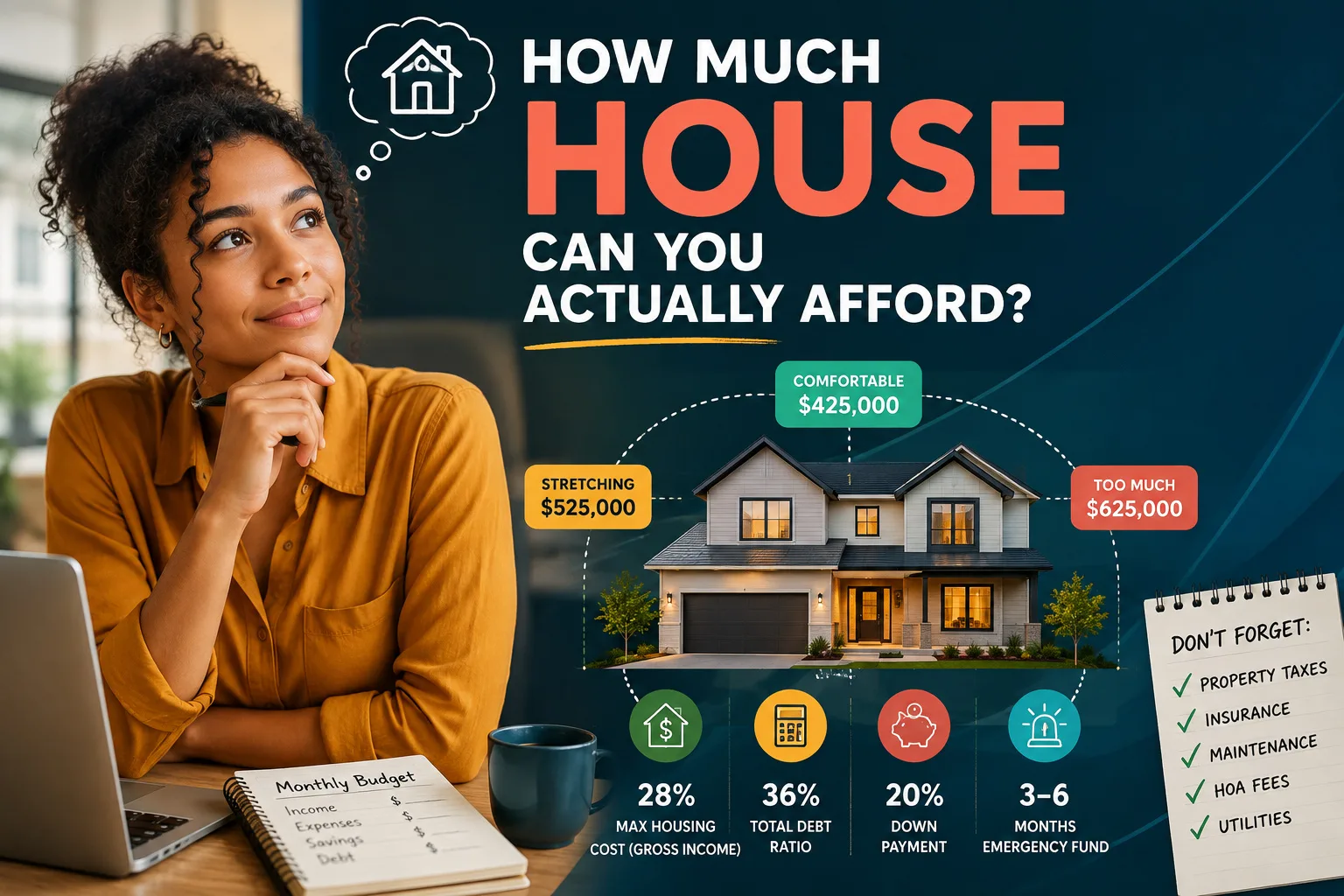
A lender will often approve a mortgage for more than most people should comfortably take on — qualification and genuine affordability are calculated differently, and confusing the two is one of the more common home-buying mistakes.
How lenders calculate what you qualify for
Most lenders cap total monthly debt payments — including the new mortgage — at a percentage of income, commonly somewhere between 36% and 43%. Existing debt payments (car loans, other loans, credit card minimums) get subtracted from that allowance first, and whatever remains determines the maximum mortgage payment, and therefore the maximum loan amount, at a given rate and term.
Why the maximum isn't the same as the comfortable amount
That debt-to-income formula doesn't account for savings goals, retirement contributions, an emergency fund, or simply the flexibility to handle a bad month without stress — it's calculated purely around whether you can technically make the payments without defaulting. Many financial planners suggest targeting a mortgage payment meaningfully below the lender's calculated maximum specifically to preserve room for everything else a budget needs to cover.
What existing debt does to your number
Two buyers with identical income can qualify for very different mortgage amounts if one carries meaningful existing debt. Paying down a car loan or clearing credit card balances before a mortgage application can increase what you qualify for — sometimes more effectively, and more within your direct control, than trying to save a larger down payment in the same timeframe.
Costs beyond the mortgage payment itself
The loan payment is only part of homeownership's real monthly cost — property tax, insurance, maintenance, and utilities (often higher for a larger home than a rental) all add up on top. Any affordability calculation based on loan payment alone understates the true cost of owning a specific home, which is worth building in as a buffer before committing to a number near the top of what a lender will approve.
A practical way to set your own ceiling
Rather than defaulting to the maximum a lender's formula allows, work backward from a monthly housing budget you're genuinely comfortable committing to for years, factoring in the other costs above, and use that as your actual ceiling — treating the lender's maximum as an upper bound to stay well under, not a target to reach.
How interest rate changes shift the whole calculation
Because affordability is calculated backward from a maximum monthly payment, the interest rate at the time of borrowing has an outsized effect on how much home that payment can actually finance — a few percentage points of rate difference can change the affordable loan amount by a significant margin, even with income and existing debt held constant. Rechecking affordability at the actual rate available when ready to borrow, rather than relying on an estimate made months earlier under different rate conditions, avoids planning around a number that's already gone stale.
The down payment trade-off
A larger down payment directly increases the affordable home price for a given monthly payment budget, but it also means committing more cash upfront to a single illiquid asset. Whether it's worth stretching the down payment further is a genuinely personal trade-off — weighed against maintaining an adequate emergency fund and not depleting savings needed for other near-term goals, not just against getting the biggest home price the math allows.