 Genzee
How Big Should Your Emergency Fund Actually Be?
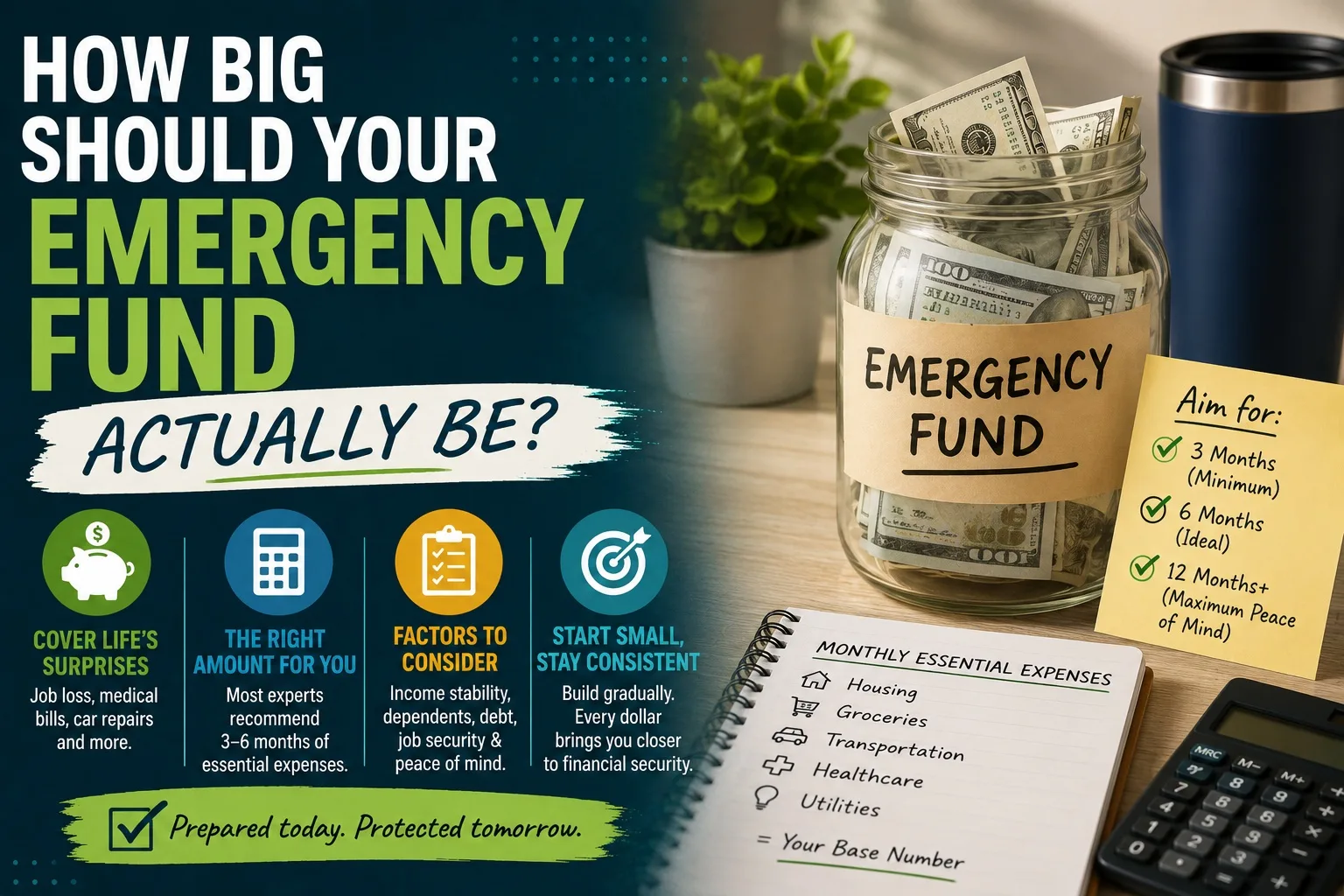
"Save three to six months of expenses" is one of the most repeated pieces of financial advice, and also one of the vaguest — it treats a stable salaried employee and a commission-based freelancer as if they face identical risk, which they clearly don't.
What actually goes in the target
An emergency fund is sized around essential expenses, not full normal spending: rent or mortgage, groceries, utilities, transport, insurance, and minimum debt payments. It deliberately excludes discretionary spending — dining out, subscriptions, entertainment — because in a genuine emergency, those would be the first things cut, not funded from savings.
Why the range spans 3 to 6 months
Three months is generally considered a reasonable floor for someone with stable, predictable income and no dependents relying solely on them — enough to cover a typical short job search. Six months or more is more commonly recommended for less predictable situations: freelance or commission-based income, a household relying on a single income, or a field where finding comparable work historically takes longer.
Where it should actually be kept
The entire value of an emergency fund is guaranteed availability at full value, exactly when it's needed — which rules out most investment accounts, since they can be down in value at precisely the wrong moment. A standard savings account, ideally one with a small amount of friction to withdraw from (discouraging casual dipping into it for non-emergencies), is the conventional choice over anything market-linked.
Building it without stalling everything else
A common mistake is treating the emergency fund as a prerequisite that must be fully funded before any other financial goal — debt payoff, retirement contributions — can start. In practice, many financial planners suggest building a smaller starter fund (one month's expenses) quickly, then working on high-interest debt and the full emergency fund target in parallel, since both are working toward the same underlying goal: financial resilience against the unexpected.
Adjusting the target as life changes
An emergency fund target is not a one-time calculation — it should move when essential expenses or income stability change. Taking on a mortgage, having a dependent, or shifting from salaried to freelance income are all events that typically raise the target, either because monthly essentials increased or because income became less predictable. Revisiting the target roughly once a year, or after any major life change, keeps it aligned with actual current risk rather than a figure calculated years earlier under different circumstances.
What "using" the fund actually looks like
The hardest part for many people is not building the fund — it's using it without guilt when a genuine emergency arrives. A fund that's never touched despite a real qualifying event (job loss, an unavoidable major repair, an unexpected medical cost) isn't serving its purpose; it's just idle cash. Treating a withdrawal for a genuine emergency as the fund working exactly as intended, then rebuilding it afterward, is a healthier mental model than treating the balance itself as the goal.