 Genzee
Capital Gains Tax 101: Short-Term vs. Long-Term, Explained
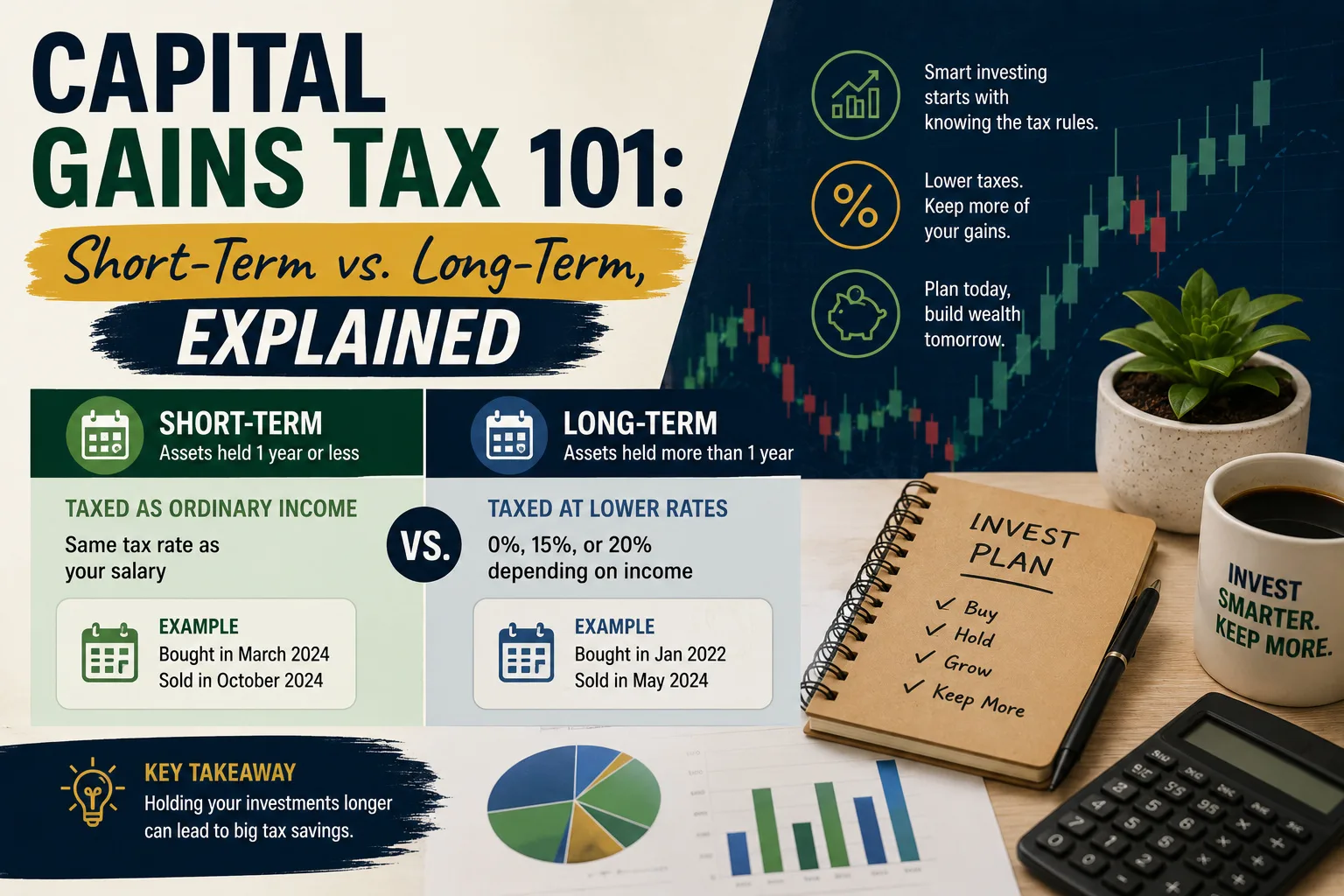
Selling an investment for a profit triggers a tax bill in most jurisdictions — but how much tax depends on more than just the size of the gain. In many tax systems, how long the asset was held before selling changes the rate substantially.
What counts as a capital gain
A capital gain is the profit realized when an asset — stocks, property, cryptocurrency, and other investments — sells for more than its purchase price, after accounting for directly related costs like brokerage fees. It's only realized (and generally only taxed) when the asset is actually sold, not simply while its paper value rises.
Why short-term and long-term are taxed differently
Many tax systems apply a reduced effective rate to gains on assets held beyond a set threshold — commonly a year, though this varies by country — specifically to encourage longer-term investment over rapid, speculative trading. Short-term gains are frequently taxed at the same rate as ordinary income, which is often meaningfully higher than the long-term rate.
The practical effect on a sale decision
Because the tax difference between short-term and long-term treatment can be substantial, the calendar can genuinely matter to an investment decision: selling an asset a few weeks before it crosses the long-term threshold, purely to lock in a gain, can mean paying a noticeably higher tax rate than waiting slightly longer would have required. This isn't a reason to hold every position indefinitely, but it's worth factoring into timing when a sale isn't otherwise urgent.
What this calculation typically leaves out
Real capital gains tax calculations often involve more than a single flat rate: exemption thresholds, the ability to offset gains with losses from other sales in the same period, and special treatment for a primary residence are all common in various tax systems. A quick estimate is useful for planning a sale, but the exact figure for filing should come from your jurisdiction's actual rules or a tax advisor, not a simplified calculator alone.
Why tracking cost basis matters from day one
Every capital gains calculation starts from the purchase price (the "cost basis"), including any costs that legitimately add to it — a home's cost basis, for example, can include significant capital improvements, not just the original purchase price. Keeping records of an asset's true cost basis from the moment it's acquired, rather than trying to reconstruct it years later at the point of sale, makes an eventual tax calculation both easier and more accurate.