 Genzee
Canada Income Tax 2026: Federal Brackets Explained
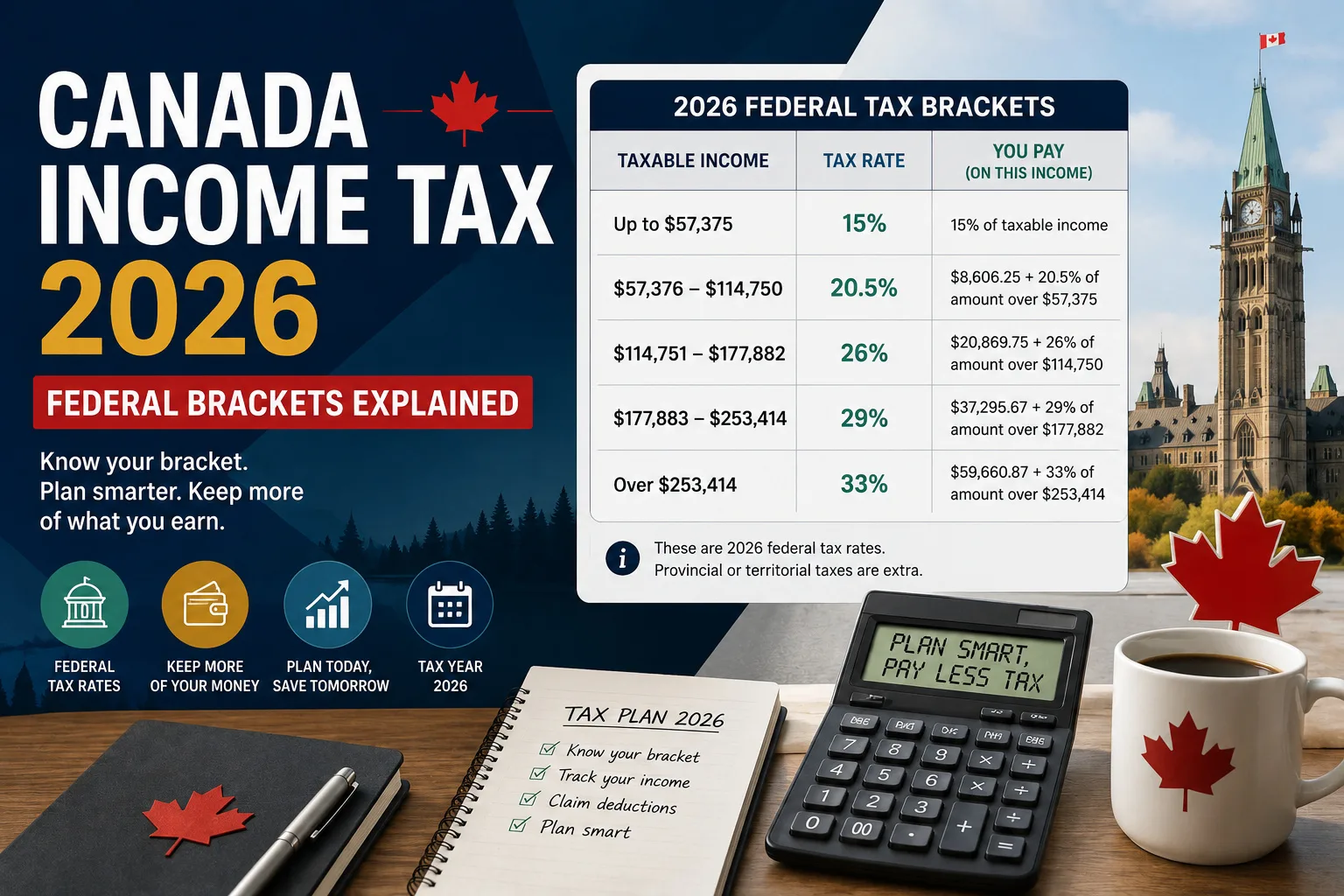
Canada's income tax system is genuinely two systems stacked on top of each other: a federal tax that applies the same way everywhere in the country, and a separate provincial or territorial tax layered on top, with its own brackets that differ depending on where you live. This article covers the federal side only — provincial tax adds a further amount on top and isn't included in any of the numbers below. Always calculate the two separately.
The 2026 federal brackets
Canada's federal income tax is progressive and marginal: each bracket's rate only applies to the slice of income within that bracket, not your entire income. The 2026 federal brackets are:
Notice the bottom rate: it's 14%, not the 15% long associated with Canada's lowest federal bracket. That's a real, recent change — the basic rate was reduced from 15% to 14%, phased in starting July 2025, effectively landing at 14% for full tax years from 2026 onward. It's a small-sounding change, but because it applies to the first slice of every taxpayer's income, it quietly reduces the federal bill for essentially everyone who pays federal tax at all.
How marginal brackets actually work — a worked example
Take a taxable income of $90,000. It doesn't get taxed at a flat 20.5% just because it falls in the second bracket. Instead:
- The first $58,523 is taxed at 14% = $8,193.22
- The remaining $31,477 (from $58,523 to $90,000) is taxed at 20.5% = $6,452.79
Total federal tax: roughly $14,646, for an average (effective) federal rate of about 16.3% — well below the 20.5% “bracket” most people would assume applies. This gap between your top marginal rate and your actual average rate is the single most misunderstood part of any bracket system, in Canada or elsewhere.
Federal tax is only half the picture
Every province and territory charges its own income tax on top of the federal amount, using entirely separate brackets and rates that it sets independently. Two people with identical federal taxable income in two different provinces can end up with noticeably different total tax bills once the provincial layer is added. There's no way to give a single “total Canadian tax” figure without knowing the province — which is exactly why this article deliberately stops at the federal number. Anyone estimating their real take-home pay needs to add their specific province's tax on top of everything above.
A few other things worth knowing
- The basic personal amount — a chunk of income everyone can earn tax-free before any federal tax applies — is separate from the bracket rates and is typically indexed (adjusted) each year for inflation.
- Brackets are usually indexed annually too, so the exact dollar thresholds shift slightly most years — always confirm the current-year numbers rather than assuming last year's figures still apply.
- This covers ordinary employment/self-employment income — capital gains, dividends and other income types can have different inclusion rates or credits that change the effective tax on that income.
Why the marginal system matters for raises and bonuses
A common worry — “a raise will push me into a higher bracket and I'll take home less” — misunderstands how marginal brackets work. Because only the income above a threshold is taxed at the higher rate, a raise or bonus can never reduce your take-home pay overall; at worst, the portion of income sitting in the new bracket is taxed a bit more heavily than the portion below it, but every dollar still nets out to more in your pocket than not earning it at all. This misunderstanding causes people to genuinely decline raises or extra work out of a mistaken fear — understanding the marginal structure above is the fix.
Estimate your own federal tax quickly with the Canada income tax calculator, and use the percentage calculator to sanity-check any bracket math by hand.
Figures above are the 2026 federal brackets only and are current as of this writing — provincial tax is calculated separately and adds to the total, and thresholds are typically adjusted each year, so confirm current numbers with the CRA before filing.
Frequently asked questions
Do I pay the top bracket rate on all of my income?No — Canada's federal tax is marginal, meaning each bracket's rate only applies to the portion of your income that falls within that bracket. Your overall (effective) tax rate is always lower than your top marginal rate.
The federal government reduced the bottom bracket rate from 15% to 14%, phased in starting July 2025 and applying for the full 2026 tax year onward — a broad-based cut that reduces federal tax on the first slice of income for nearly all taxpayers.
No. These are federal brackets only. Every province and territory adds its own separate income tax with its own brackets, so your real total tax bill is the federal amount plus your province's amount.
The rates tend to be stable, but the dollar thresholds are typically indexed for inflation and adjusted most years. Always check the current tax year's official figures rather than assuming a previous year's brackets still apply.
Not exactly — different income types (like capital gains and eligible dividends) often have different inclusion rates or tax credits before the bracket rates are applied, which changes their effective tax rate compared to ordinary employment income.
Related tools
- CACanada Income Tax Calculator
Federal tax on your income using the current 2026 bracket rates.
- TAXPakistan Salary Tax Calculator
FY 2026-27 income tax on your salary, with a slab-by-slab breakdown.
- TDTax Deduction Calculator
See how pension and donation deductions cut your taxable income and tax.
- %Percentage Calculator
Percent of a number, percentage share, and increase or decrease.