 Genzee
IRS Confirms 401(k) Contribution Limit Rises to $24,500 for 2026
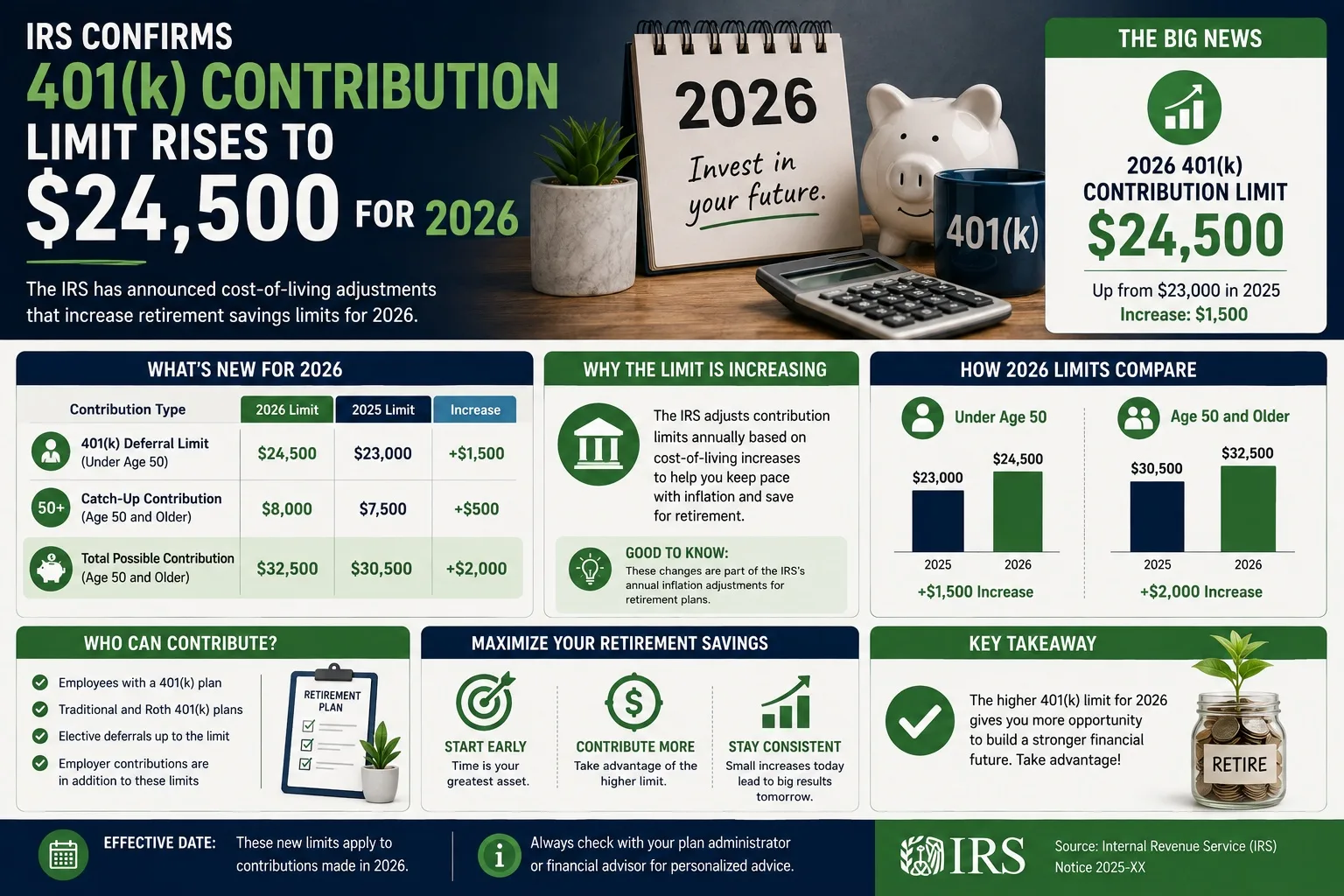
The IRS has confirmed the 2026 annual contribution limit for 401(k) plans rises to $24,500, up from the prior year, with the IRA contribution limit increasing to $7,500 — both adjustments tied to inflation.
What actually changed
The employee elective deferral limit for 401(k), 403(b) and most 457 plans is now $24,500 for 2026. Catch-up contribution limits for those aged 50 and over, and the enhanced "super catch-up" for ages 60-63 introduced under recent legislation, apply on top of this base limit, letting older savers set aside meaningfully more each year.
Why the limit rises most years
Contribution limits are adjusted periodically based on inflation data, specifically the Consumer Price Index. In years with higher inflation, the limit tends to rise by a larger amount; in lower-inflation years, it can stay flat, as has happened with some other retirement account limits in recent years.
What this means for retirement planning
A higher contribution limit is only useful to the extent someone can actually afford to contribute more — but for anyone already maxing out their prior year's limit, the increase is an automatic opportunity to shelter additional income from current-year tax, compounding over a longer horizon toward retirement.
Source: Internal Revenue Service