 Genzee
UK State Pension Set to Rise Above Tax-Free Threshold for First Time Under Triple Lock
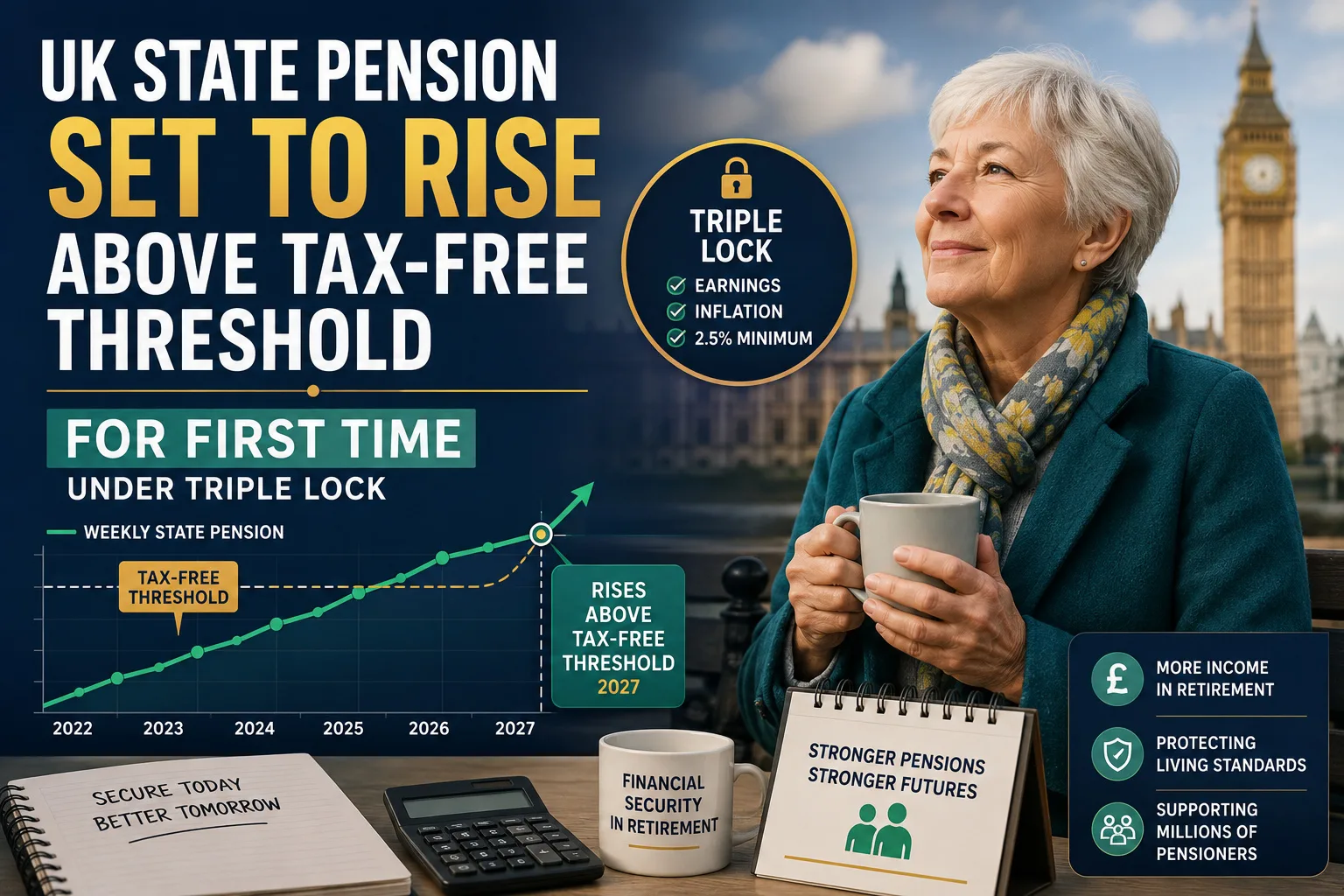
Early wage growth data points to a roughly 4.2% increase in the UK's state pension from April 2027 under the triple lock policy — a rise large enough that, combined with a long-frozen tax threshold, full-rate pensioners will pay income tax on their state pension for the first time.
How the triple lock works
The triple lock guarantees the state pension rises each year by whichever is highest of three measures: average wage growth (May-July of the prior year), CPI inflation (measured to September), or a flat 2.5%. Current wage growth data points to 4.2% being the applicable figure for April 2027, which would take the full new state pension to at least £241.90 a week.
Why that collides with the tax threshold
The income tax personal allowance — the amount anyone can earn before paying any income tax — has been frozen at £12,570 and is set to stay frozen until at least April 2031. A rising state pension and a frozen tax threshold were always going to meet eventually; 2027 is projected to be the year the full state pension itself exceeds that threshold, meaning pensioners with no other income will owe tax purely on their state pension for the first time.
Why this is a genuinely new situation
Historically, the state pension alone sat comfortably below the tax-free threshold, so most pensioners with no other significant income paid no income tax at all. This shift means many pensioners will need to engage with the tax system for the first time purely because of a policy interaction — a rising, protected pension meeting a deliberately frozen allowance — rather than any change in their actual financial circumstances.
Source: LCP