 Genzee
UK Freezes National Insurance and Income Tax Thresholds Until 2030-31
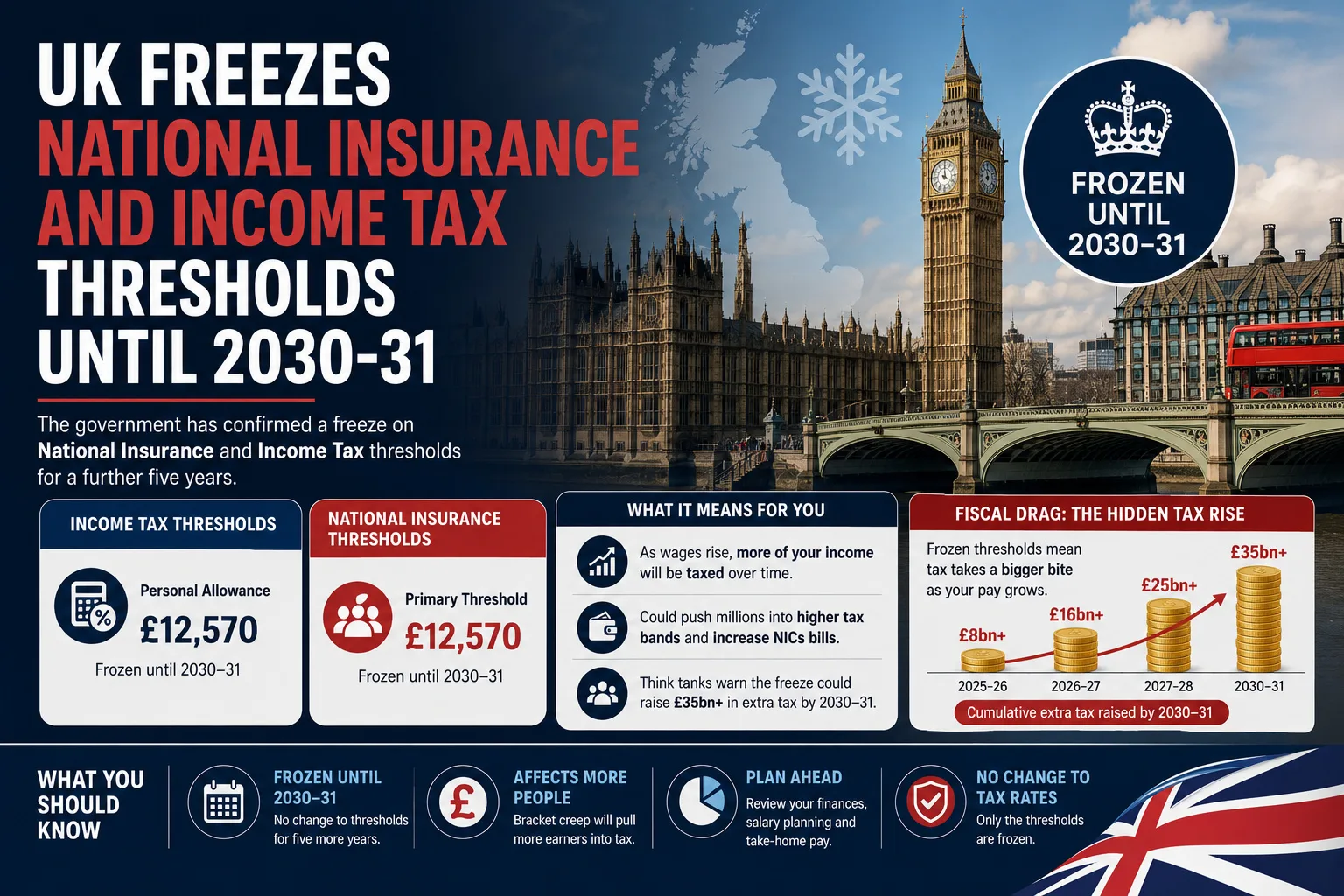
UK National Insurance thresholds and income tax bands remain frozen until 2030-31, extending a policy that raises effective tax revenue over time without any headline rate ever changing — commonly referred to as "fiscal drag."
What's actually frozen
The employer National Insurance secondary threshold stays at £5,000 a year, the employee NI rate holds at 8%, and income tax thresholds — the £12,750 personal allowance, £50,270 higher-rate band, and £125,140 additional-rate band — are all frozen through 2030-31. The Lower Earnings Limit is one of the few figures still rising, moving to £6,708 annually under standard inflation indexation.
How a frozen threshold quietly raises tax
When wages rise with inflation but tax thresholds don't move, more income each year crosses into higher tax bands or becomes newly taxable — without any government ever announcing a tax increase. Over a multi-year freeze, this "fiscal drag" effect can add up to a substantial real increase in the average tax burden, even though no rate has technically changed.
Why this matters for pay rise planning
Anyone receiving a pay rise during a threshold freeze should expect to keep a smaller share of that raise than the headline percentage suggests, since more of it lands in a bracket taxed at the same or a higher rate than before. Understanding this ahead of a raise or when negotiating pay helps set realistic expectations for the actual take-home impact rather than assuming the full raise translates directly to spendable income.
Source: House of Commons Library