 Genzee
India Tightens GST Filing With New ITC 'Locking' Rule
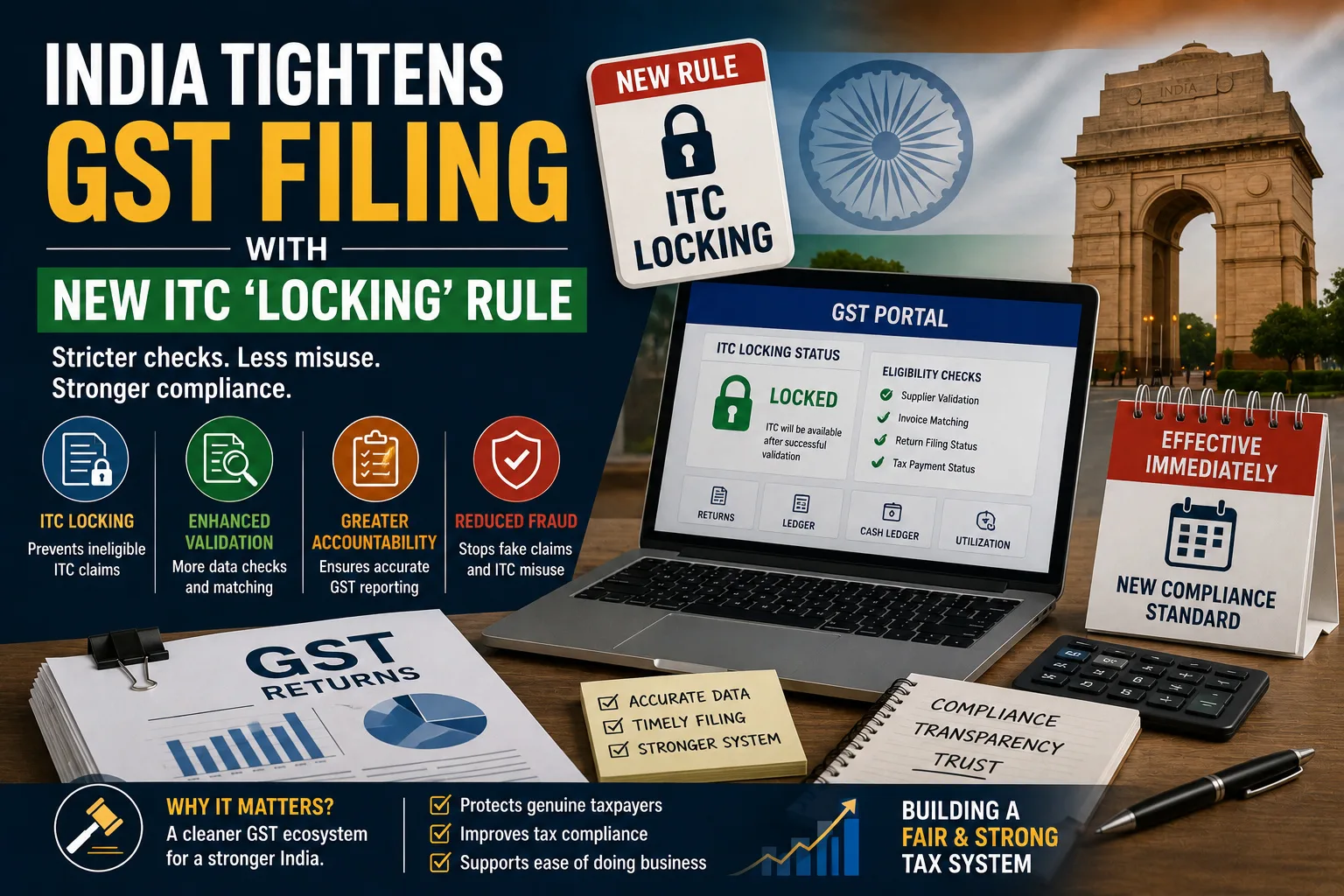
India's GST filing process got noticeably stricter from July 2026, with the GSTR-3B return moving to a hard-locked input tax credit (ITC) model instead of the old free-text entry system.
What actually changed
As reported by Taxscan, the ITC figure a business can claim in GSTR-3B is now locked based on GSTR-2B data — the auto-generated statement built from suppliers' filings — rather than being an editable field the taxpayer fills in manually. In practice, this means businesses cannot simply type in whatever credit figure they believe they are owed; they must reconcile the Invoice Management System (IMS), GSTR-2B, vendor invoices and reverse-charge entries before filing, shifting GST returns from an "enter and adjust" habit to a "verify before filing" discipline.
Who feels this first
Small business owners, freelancers billing GST-registered clients, and shopkeepers who file their own returns are most likely to be caught out if a supplier is late uploading an invoice, since a missing entry on the supplier's side can mean the credit simply is not there to claim yet. Keeping clean, timely invoices on your own end matters more than ever under the new system.
Our Invoice Generator can help you produce clear, itemised invoices so your own paperwork does not become the reason a client's credit gets stuck.
Note: This is a plain-language summary, not tax/financial advice. Rates and rules can change; verify your specific case with the relevant authority or a qualified professional. See our editorial policy for how we source and date these updates.
Source: Taxscan