 Genzee
Alternative Inflation Gauges the Fed Watches Are at Multi-Year Lows
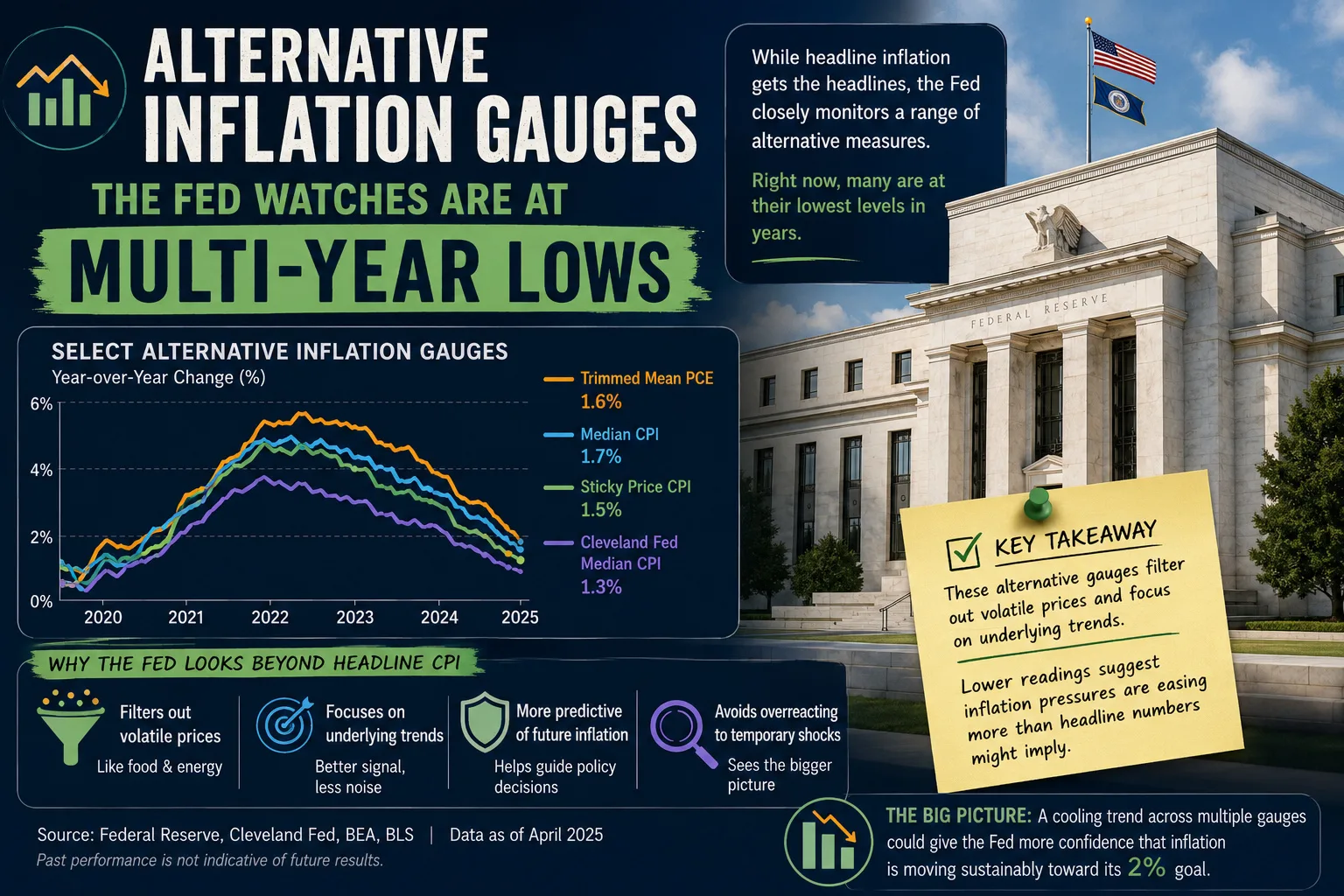
Behind the Federal Reserve's headline inflation number, a set of alternative measures the central bank also watches has quietly dropped to some of the lowest readings in years — a striking contrast at a moment when Fed Chair Kevin Warsh is under pressure to prove the Fed is serious about controlling prices.
The trimmed-mean signal
The Dallas Fed's "trimmed mean" measure — which strips out the most extreme price movements in either direction to isolate the underlying trend — put one-month annualized inflation for June at just 1.4%, its lowest reading since November 2020, with the 12-month trimmed-mean rate down to 2.2%. Dallas Fed President Lorie Logan has cautioned the measure may currently be excluding too many genuine price increases, making it read lower than the true trend.
What bond markets are pricing in
Market-based inflation expectations tell a similar story: the Treasury market's five-year breakeven inflation rate has fallen sharply since May to around 2.26%, and the one-year breakeven has dropped nearly half a percentage point over the same period, though it remains elevated near 3%.
Why the Fed's own preferred gauge is under scrutiny
Complicating the picture, Warsh has publicly dismissed the Fed's traditional PCE inflation gauge — its long-standing preferred measure — as unreliable, and has set up internal task forces to reconsider how the central bank measures inflation. For anyone trying to read the Fed's next move on interest rates, the takeaway is that "inflation" isn't one number the Fed watches — it's a basket of sometimes-contradictory signals, and which one gets emphasized can shape the outlook people build their financial plans around.
Source: CNBC